The best games like Blue Prince for puzzle fans
The best games like Blue Prince combine knowledge-based progression, layered mysteries and inventive puzzles, from Outer Wilds and Tunic to Lorelei.
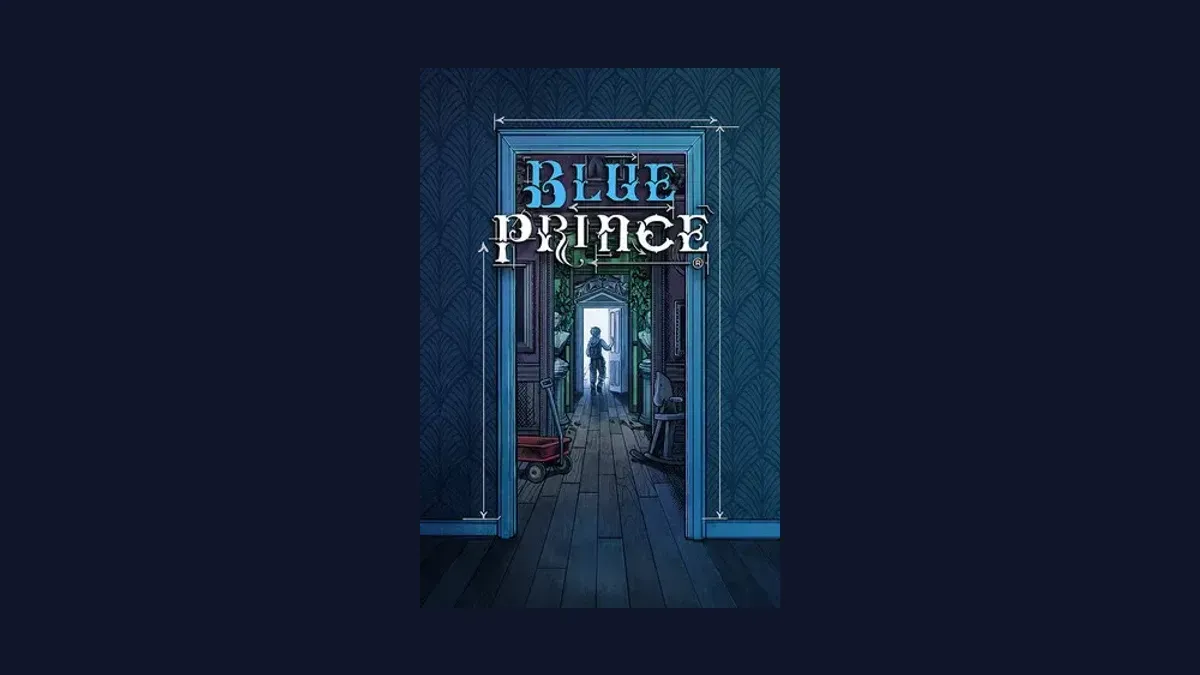
The best games like Blue Prince combine observation, note-taking, layered mysteries and progress measured by what the player understands. Outer Wilds is the closest overall alternative because each expedition reveals information that changes how the entire world can be approached. Tunic is the strongest choice for hidden rules, while Lorelei and the Laser Eyes provides another dense property filled with interconnected puzzles.
No alternative reproduces Blue Prince's complete formula of drafting rooms, managing daily resources and pursuing a mystery through a changing mansion. The closest matches instead preserve its deeper appeal: clues that remain useful after a reset, spaces that must be mentally mapped and revelations that make earlier details suddenly meaningful.
Best games like Blue Prince at a glance
| Rank | Game | Best for | Core similarity | Multiplayer |
|---|---|---|---|---|
| 1 | Outer Wilds | Knowledge-based progression | Repeating exploration and interconnected mystery | No |
| 2 | Tunic | Hidden rules and secrets | Deciphering information that changes the world | No |
| 3 | The Witness | Environmental puzzle mastery | Observation, note-taking and systemic puzzles | No |
| 4 | Myst | Classic first-person mystery | Strange property, mechanisms and journals | No |
| 5 | Return of the Obra Dinn | Deductive investigation | Building conclusions from fragmented evidence | No |
| 6 | Chants of Sennaar | Language decoding | Inference, symbols and connected cultures | No |
| 7 | Lorelei and the Laser Eyes | Surreal mansion puzzles | Documents, codes and layered mystery | No |
| 8 | The Case of the Golden Idol | Reconstructing events | Clues, names and logical deduction | No |
| 9 | Inscryption | Roguelike structure and meta-mystery | Runs, drafting and secrets beyond the main game | No |
| 10 | The Forgotten City | Repeating narrative investigation | Time loop, dialogue and accumulated knowledge | No |
| 11 | Escape Simulator | Cooperative escape rooms | First-person object puzzles and hidden clues | Yes |
| 12 | Void Stranger | Deeply hidden puzzle systems | Repetition, secrets and rule discovery | No |
1. Outer Wilds
Best overall alternative
Outer Wilds places the player in a small solar system trapped in a repeating time loop. Each cycle provides another opportunity to explore planets, investigate an ancient civilization and understand why the system behaves as it does.
Its link to Blue Prince is knowledge-based progression. The player does not become stronger through levels or equipment. Instead, discoveries reveal where to go, when an event occurs and how apparently separate clues connect. Information learned during one expedition can immediately unlock a new approach in the next.
The environment also changes over time. Sand moves between planets, structures collapse and access routes open or close, making timing part of the puzzle. The ship log organizes discoveries, but solving the central mystery still requires observation and inference.
Why Blue Prince players should try it:
- Progress determined by knowledge
- Interconnected mystery across multiple locations
- Repeating expedition structure
- Environmental changes that affect access
- Revelations that recontextualize earlier clues
Main difference: Outer Wilds emphasizes freeform space exploration and movement rather than room drafting and inventory management.
2. Tunic
Best for hidden rules and layered secrets
Tunic initially resembles an isometric action adventure, but its deepest system is an instruction manual assembled page by page. The manual contains maps, diagrams, symbols and partial explanations written largely in an unfamiliar script.
Finding a page often changes the meaning of something already seen. A decorative marking can become a navigation clue, while a seemingly ordinary action may reveal a system that was always available. This creates the same pleasure as Blue Prince’s strongest discoveries: the world has not changed, but the player’s understanding has.
Combat and exploration are more prominent than in Blue Prince. Accessibility options can reduce combat pressure for players primarily interested in the manual, puzzles and hidden paths.
Why Blue Prince players should try it:
- Knowledge-gated progression
- An in-game manual that must be interpreted
- Dense secrets and visual clues
- Familiar places transformed by new understanding
- Long-term meta-puzzles beyond the main route
Main difference: Tunic is an action adventure with combat, bosses and a fixed world rather than a daily procedural mansion.
3. The Witness
Best for environmental puzzle mastery
The Witness places the player on an open island filled with line-drawing panels. Each region teaches a visual rule through carefully arranged examples rather than written instructions.
The apparent simplicity hides a large logical vocabulary. Symbols gain meaning through experimentation, and later puzzles combine principles learned in different areas. Observation also extends beyond the panels because the environment itself can contain relevant patterns.
Blue Prince players who enjoy keeping notes and testing theories will recognize the rhythm of confusion, hypothesis and sudden understanding. The island is fixed, but learning its language changes how every surface is perceived.
Why Blue Prince players should try it:
- Rules taught without direct explanation
- Open exploration across themed areas
- Dense environmental observation
- Puzzles that combine previously learned systems
- Optional secrets for highly attentive players
Main difference: The Witness has little traditional narrative and no resource-management or run-based structure.
4. Myst
Best classic first-person mystery
Myst sends the player to an abandoned island containing strange architecture, books and mechanical devices. Progress comes from examining the environment, reading journals and understanding how mechanisms are connected.
The island functions as a broad puzzle space rather than a series of isolated challenges. A symbol in one location may explain a machine elsewhere, while written material provides both story context and essential information.
Its influence is visible in many first-person puzzle adventures, including games that rely on physical note-taking and spatial memory. The modern edition improves movement and presentation while preserving the original structure.
Why Blue Prince players should try it:
- Mysterious property explored in first person
- Journals, diagrams and mechanical clues
- Interconnected locations
- Minimal direct instruction
- Story discovered through investigation
Main difference: Myst uses a fixed set of spaces and has no roguelike reset or drafting system.
5. Return of the Obra Dinn
Best deduction game
Return of the Obra Dinn asks an insurance investigator to determine what happened aboard a merchant ship that returned without its crew. A supernatural device reveals the final moment of a person’s life, freezing a scene that can be examined from several angles.
The challenge is to identify crew members and determine their fates. Uniforms, accents, relationships, job locations and tiny background details can all support a conclusion. The game rarely confirms a single deduction immediately, forcing the player to build a consistent explanation across many scenes.
This is an excellent match for Blue Prince players who enjoy linking documents, names and visual evidence. Progress depends on inference rather than upgrades or mechanical skill.
Why Blue Prince players should try it:
- Evidence spread across many scenes
- Names, roles and events reconstructed logically
- Strong notebook-driven investigation
- Small visual clues with major importance
- A mystery solved through accumulated understanding
Main difference: It is a structured investigation without procedural generation, resource limits or environmental construction.
6. Chants of Sennaar
Best language-decoding alternative
Chants of Sennaar follows a traveler climbing a tower inhabited by groups that speak different languages. Players observe conversations, symbols and environmental context, then assign possible meanings in a notebook.
Translation becomes both the puzzle system and the route through the world. Understanding a word can explain a sign, unlock a conversation or reveal why two communities misunderstand each other. Confirmed translations gradually create a usable vocabulary.
Like Blue Prince, it rewards careful documentation and cross-referencing clues that appear in different forms. Its structure is more linear, but each linguistic breakthrough changes how previous scenes are understood.
Why Blue Prince players should try it:
- Built-in notebook for hypotheses
- Symbols decoded through context
- Connected cultures and environments
- Puzzles integrated into the world
- Understanding used as progression
Main difference: The campaign follows a more directed route and focuses on language rather than spatial drafting.
7. Lorelei and the Laser Eyes
Best for another property full of puzzles
Lorelei and the Laser Eyes takes place largely around a mysterious hotel filled with locked spaces, documents, dates, films, symbols and numerical riddles. The property operates as a network of puzzles whose relationships become clearer as more evidence is collected.
Its surreal monochrome presentation creates uncertainty about time, identity and what is reliable. Many puzzles require information obtained elsewhere, so keeping notes becomes essential. A detail that seems decorative can later become the missing part of a code.
This is one of the strongest Blue Prince alternatives for players who specifically want to inhabit a building and gradually understand the mystery encoded into its rooms.
Why Blue Prince players should try it:
- Dense hotel environment
- Documents, codes and visual symbols
- Many interconnected puzzles
- Heavy use of dates and numbers
- A larger mystery assembled gradually
Main difference: The hotel is authored rather than procedurally drafted, and the tone is more surreal and abstract.
8. The Case of the Golden Idol
Best for reconstructing events from clues
The Case of the Golden Idol presents a sequence of deaths and asks the player to determine who was involved, what happened and how each event connects to a broader conspiracy.
Players inspect frozen scenes, collect words and place those words into statements that explain people, motives and actions. Each solved case contributes information needed to understand later events.
The connection to Blue Prince lies in cross-referencing details rather than mechanical similarity. Names, objects and repeated symbols gain importance across cases, rewarding players who document information and question initial assumptions.
Why Blue Prince players should try it:
- Logical reconstruction of complex scenes
- Recurring characters and objects
- Clues that matter across several cases
- Minimal hand-holding
- Strong emphasis on names, motives and chronology
Main difference: It uses static investigation scenes and explicit deduction statements instead of first-person environmental exploration.
9. Inscryption
Best roguelike mystery alternative
Inscryption begins as a card-based roguelike played in a dark cabin. Cards, items and deck manipulation determine whether a run survives, but the surrounding room contains puzzles and clues that reveal a larger structure.
Its relevance to Blue Prince comes from combining repeated runs with secrets outside the obvious central mechanic. Failure creates another attempt, but knowledge gained in the cabin and card system gradually opens new possibilities.
Inscryption is most effective when approached without detailed spoilers. Its story and rules evolve significantly, and discovering those changes is part of the experience.
Why Blue Prince players should try it:
- Run-based progression
- Drafting and resource decisions
- Escape-room puzzles around the main game
- Layered narrative secrets
- Rules that change as understanding grows
Main difference: Card battles are the primary mechanic, and the atmosphere leans heavily into horror.
10. The Forgotten City
Best repeating narrative investigation
The Forgotten City traps the player in an ancient settlement governed by a rule that causes catastrophe if anyone commits a serious wrongdoing. A time loop allows the investigation to restart while knowledge and selected objectives carry forward.
Conversations, exploration and moral decisions reveal how residents are connected. Information learned from one person can unlock a new argument or action during a later loop, making dialogue itself a progression system.
Blue Prince players who enjoy using one day’s information to improve the next will find a familiar structure, although The Forgotten City focuses much more strongly on characters and narrative choices.
Why Blue Prince players should try it:
- Knowledge preserved across repeating days
- Interconnected residents and personal stories
- Dialogue-based problem solving
- A central mystery with several threads
- Multiple routes toward major outcomes
Main difference: It is a character-driven narrative adventure rather than a systems-heavy puzzle roguelike.
11. Escape Simulator
Best cooperative alternative
Escape Simulator offers first-person rooms filled with locks, movable objects, hidden compartments and multi-stage puzzles. Rooms can be solved alone or online with other players.
The tactile interaction makes it a useful substitute for Blue Prince players who enjoy examining every shelf, rotating objects and testing combinations. Cooperative play encourages groups to split the room, share observations and combine partial discoveries.
Official rooms provide structured themes, while community-created content extends the range of puzzle designs. Individual rooms are more self-contained than Mount Holly’s larger mystery.
Why Blue Prince players should try it:
- First-person room exploration
- Object manipulation and hidden clues
- Online cooperative puzzle solving
- Short themed scenarios
- Community-created rooms
Main difference: Rooms do not form one persistent procedural estate, and knowledge rarely carries between separate scenarios.
12. Void Stranger
Best for deeply hidden puzzle systems
Void Stranger presents itself as a grid-based puzzle game about descending through rooms while managing movement and tiles. Its simple appearance hides layers of rules, secrets and structural surprises.
Repeated attempts produce knowledge that changes how the player approaches the dungeon. Solutions can depend on understanding tile behavior, route planning and information the game does not immediately explain.
Like Blue Prince, it rewards persistence beyond the apparent objective. Players who continue examining inconsistencies and testing the limits of the rules can discover that the game is much larger than its initial form suggests.
Why Blue Prince players should try it:
- Repetition that builds player knowledge
- Dense hidden systems
- Grid-based spatial puzzles
- Secrets beyond the apparent ending
- Strong encouragement to take notes and experiment
Main difference: It uses abstract two-dimensional puzzles and can be considerably more severe and opaque.
How to choose the right alternative
Choose knowledge-based progression
Start with Outer Wilds if the strongest part of Blue Prince was realizing that understanding itself is the permanent upgrade. Tunic is the better option when you want secrets embedded in maps, language and an instruction manual.
Choose first-person environmental puzzles
The Witness is best for learning visual rules through observation. Myst offers a classic mysterious property, while Escape Simulator is the strongest cooperative choice.
Choose a dense building mystery
Lorelei and the Laser Eyes provides the closest authored property filled with codes, documents and locked rooms. Inscryption is the better choice if repeated runs and meta-mystery matter more than architectural exploration.
Choose pure deduction
Return of the Obra Dinn is strongest for reconstructing identities and events. The Case of the Golden Idol offers compact scenes tied to a larger conspiracy, while Chants of Sennaar focuses deduction on language.
Choose a repeating narrative
The Forgotten City uses a time loop, conversations and accumulated information. Outer Wilds also repeats, but places more emphasis on environmental discovery and physical exploration.
How we chose these games
The games come from the PC games we price that cover this topic, plus games sharing at least four of Blue Prince’s most characteristic Steam user tags (read on 7 October 2026). We kept the ones where progress depends on what the player understands rather than on reflexes, and ranked them by how strongly knowledge, note-taking and layered mystery drive play.
Frequently asked questions
What game is closest to Blue Prince?
Outer Wilds is the closest overall alternative in spirit. Both games make knowledge the most important form of progression and ask the player to connect clues gathered across repeated expeditions.
Which game has puzzles most like Blue Prince?
Lorelei and the Laser Eyes is the strongest match for interconnected codes, documents and puzzles spread through a mysterious building. The Witness is better for systemic environmental puzzles, while Myst offers a classic first-person property filled with mechanisms.
Are there other roguelike puzzle games like Blue Prince?
Inscryption and Void Stranger both combine repetition with hidden puzzle systems. Neither uses Blue Prince’s room-drafting mechanic, but both reveal deeper rules and secrets across continued attempts.
Is there a multiplayer game like Blue Prince?
Escape Simulator is the best cooperative alternative. Players can search first-person escape rooms together, exchange clues and solve multi-stage object puzzles online.
Which alternative requires the most note-taking?
Lorelei and the Laser Eyes strongly benefits from recording dates, symbols and codes. Return of the Obra Dinn and The Case of the Golden Idol also reward detailed notes about identities and relationships.
Which game should I choose if I dislike combat?
Outer Wilds, The Witness, Myst, Return of the Obra Dinn, Chants of Sennaar, Lorelei and the Laser Eyes, The Case of the Golden Idol and Escape Simulator all focus primarily on exploration, observation or puzzles rather than conventional combat.
Final verdict
Outer Wilds is the best game like Blue Prince overall because progress comes from knowledge gathered across repeated expeditions. Tunic is the strongest alternative for hidden rules and revelations that transform the meaning of familiar places.
Choose Lorelei and the Laser Eyes for another property packed with interconnected puzzles, Return of the Obra Dinn for rigorous deduction, or Escape Simulator for cooperative room solving. Players who want the most opaque and secret-heavy challenge should try Void Stranger.
Questions
What game is most similar to Blue Prince?
Outer Wilds is the closest overall alternative because progress comes primarily from knowledge gathered while exploring a repeating, interconnected mystery.
Which game like Blue Prince has the best hidden puzzles?
Tunic is the strongest choice for hidden rules and layered secrets because players decipher an in-game manual and reinterpret familiar places as their understanding grows.
Are there other roguelike puzzle games like Blue Prince?
Inscryption and Void Stranger both combine run-based structures with layered puzzles and secrets, although their central mechanics differ substantially from Blue Prince's room drafting.
Which Blue Prince alternative is best for co-op?
Escape Simulator is the best cooperative option, offering first-person escape rooms that can be solved alone or online with other players.
Which game should I play for another mansion mystery?
Lorelei and the Laser Eyes is the strongest choice for a surreal property filled with interconnected riddles, documents, codes and a larger mystery.

Guides written and checked by the gamekeys.deals team against our own price data and the stores' published policies.