12 Best Games Like Dwarf Fortress for Colony Survival
The best games like Dwarf Fortress simulate populations, resources, threats and failures closely enough for each colony to write its own history.
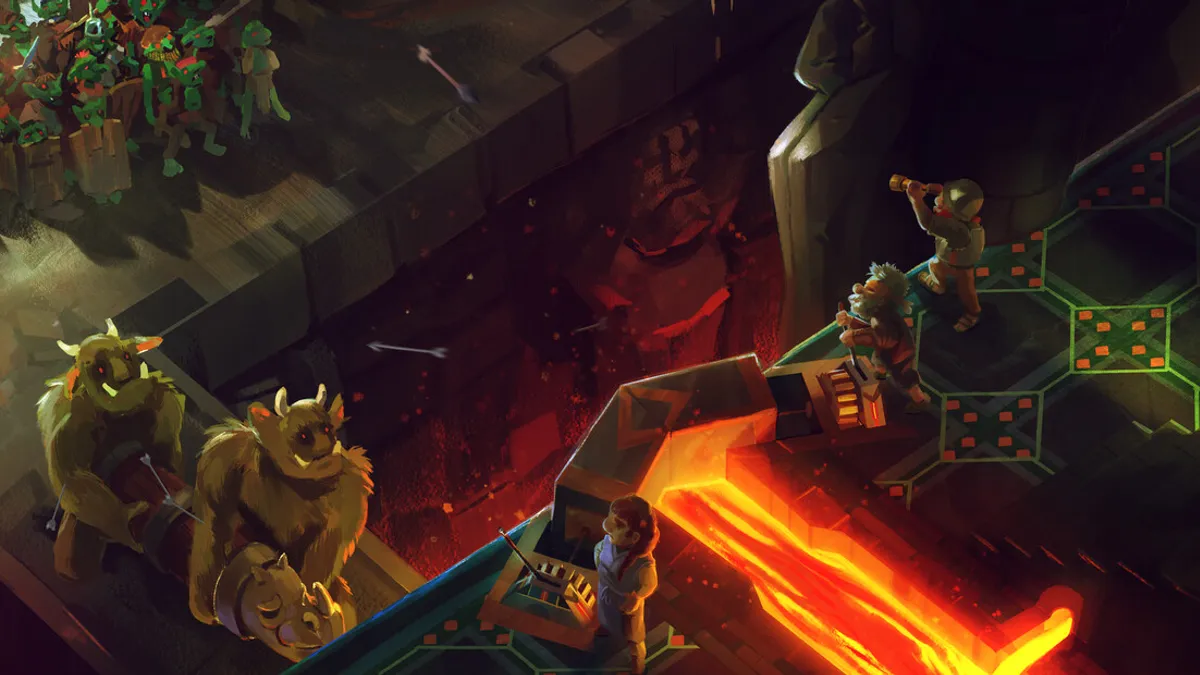
The best games like Dwarf Fortress do more than let you construct a settlement. They simulate populations, resources, environments, production chains, threats, and unexpected failures closely enough for each colony to generate its own history.
Best overall alternative: RimWorld Best for medieval survival: Banished Best for vertical building and water systems: Timberborn Best for short, repeatable settlements: Against the Storm
What Makes a Game Similar to Dwarf Fortress?
Dwarf Fortress is a single-player strategy, simulation, RPG, and indie game developed by Bay 12 Games and published by Kitfox Games. Its fortress mode asks players to establish a dwarven settlement inside a deeply generated world, keep its population supplied, expand above and below ground, and respond when interacting systems produce a crisis.
A strong Dwarf Fortress alternative should match several of these defining attributes:
- Colony simulation: settlers have jobs, needs, skills, or individual conditions.
- Base building: rooms, workshops, storage, defenses, and infrastructure form an interconnected settlement.
- Resource management: food, materials, labor, production, and trade compete for attention.
- Survival pressure: weather, enemies, disease, shortages, or environmental hazards can destabilize the colony.
- Sandbox agency: players choose their own priorities instead of following one fixed solution.
- Systemic simulation: several mechanics interact and create outcomes that were not directly scripted.
- Population management: growth creates new logistical and social demands.
- Emergent stories: success and failure produce memorable colony histories.
- Long-term progression: a small outpost can become a complex, specialized settlement.
No other game reproduces the full depth of Dwarf Fortress. The alternatives below are ranked by the number and importance of shared attributes, not merely by belonging to the city-building genre.
Games like Dwarf Fortress at a glance
| Game | Strongest shared attributes | Major difference | Best for |
|---|---|---|---|
| RimWorld | Colony simulation, colonist needs, survival, sandbox stories | Sci-fi setting and smaller colonies | The closest overall alternative |
| Founders’ Fortune | Colonist psychology, building, production, defense | Smaller fantasy village scope | Individual villager management |
| Space Haven | Crew needs, tile building, survival, exploration | Mobile spaceship colony | Life-support management |
| Timberborn | Colony building, vertical construction, survival, automation | Water and terrain are the central systems | Environmental engineering |
| Banished | Population survival, labor, food, resources, city growth | Less combat and individual storytelling | Medieval settlement survival |
| Against the Storm | Colony management, resources, multiple species, survival | Short roguelite settlements | Repeatable colony challenges |
| Stonehearth | Voxel building, settlers, jobs, crafting, defense | Warmer fantasy presentation | Creative construction |
| Prison Architect | Room planning, population routines, labor, management | Institutional rather than survival colony | Detailed facility design |
| Farthest Frontier | Farming, disease, production, trade, defense | Conventional medieval city view | Realistic settlement logistics |
| Frostpunk | Population survival, resources, infrastructure, crisis decisions | Scenario-led and less sandbox-focused | Extreme survival pressure |
| Factorio | Automation, resources, base design, expanding threats | Machines replace colonist simulation | Production-chain complexity |
| Kenshi | Sandbox survival, squads, bases, crafting, open-ended progress | Direct squad control in an open world | Character-led sandbox survival |
1. RimWorld
Closest match for: emergent stories, colonist simulation, base building, survival, and sandbox management
Developer and publisher: Ludeon Studios
Release date: November 4, 2013
Mode: Single-player
Genres: Strategy, simulation, and indie
RimWorld is the closest overall alternative to Dwarf Fortress. It simulates colonist psychology, health, relationships, combat, climate, ecology, trade, and diplomacy while an AI storyteller determines the timing and intensity of events.
Both games turn interacting systems into unscripted colony stories. A food shortage can weaken settlers, illness can reduce available labor, and a poorly timed attack can expose weaknesses in the colony’s layout. Individual colonists also carry traits, skills, injuries, and relationships that make losses mechanically important.
RimWorld generally operates at a smaller population scale and presents information more directly. This makes the relationship between a colonist’s condition and the colony’s wider problems easier to follow without removing the possibility of cascading failure.
How RimWorld Compares with Dwarf Fortress
- Shared: colony simulation, base building, survival, management, sandbox play, population needs, combat, and emergent storytelling.
- Different: RimWorld uses a sci-fi frontier and AI storytellers, while Dwarf Fortress models a larger generated fantasy history and more physical detail.
- Choose it if: you want the nearest combination of settlement management and unpredictable character stories.
2. Founders’ Fortune
Closest match for: colonist psychology, individual wishes, production, families, and base defense
Developer and publisher: Dionic Software
Release date: December 18, 2020
Mode: Single-player
Genres: Strategy, simulation, and indie
Founders’ Fortune is a fantasy village builder in which every colonist has expectations, thoughts, equipment, and personal wishes. The settlement must support farming, production, research, trade, diplomacy, families, and defense.
Its strongest connection to Dwarf Fortress is the relationship between individual residents and settlement-wide systems. Colonists are not interchangeable labor units. Their capabilities and expectations affect which tasks can be completed and what the settlement must build next.
The scope is smaller and more approachable than Dwarf Fortress, but the game preserves the idea that a functioning colony depends on both material infrastructure and the people using it.
How Founders’ Fortune Compares with Dwarf Fortress
- Shared: colony simulation, building, survival, management, villager needs, production, trade, research, and defense.
- Different: it focuses on a compact fantasy village rather than a vast fortress inside a deeply generated world.
- Choose it if: individual colonist psychology and creative house building are your priorities.
3. Space Haven
Closest match for: crew needs, tile-by-tile construction, environmental systems, exploration, and survival
Developer and publisher: Bugbyte Ltd.
Release date: May 13, 2026
Mode: Single-player
Genres: RPG, strategy, simulation, casual, and indie
Space Haven moves colony management into space. Players construct spaceships tile by tile, maintain suitable gas conditions, manage crew needs and moods, meet other groups, and explore the surrounding universe.
The ship behaves like a mobile fortress. Layout affects movement and function, while atmosphere and life support make the constructed environment part of the survival simulation. Crew members connect those technical systems to individual needs.
Dwarf Fortress offers a denser terrestrial world and a larger historical simulation. Space Haven narrows the focus to ships, crews, environmental control, and travel, producing a clearer science-fiction variation on systemic colony management.
How Space Haven Compares with Dwarf Fortress
- Shared: colony simulation, tile building, management, survival, crew moods, exploration, and sandbox progression.
- Different: the settlement travels through space and depends on life-support systems rather than underground geology.
- Choose it if: you want a Dwarf Fortress-style colony where atmosphere and ship layout are survival systems.
4. Timberborn
Closest match for: vertical construction, terraforming, resource networks, automation, and environmental survival
Developer and publisher: Mechanistry
Release date: September 15, 2021
Mode: Single-player
Genres: Strategy, simulation, and indie
Timberborn is a colony and city-building sandbox about beavers surviving a world affected by droughts and toxic waste. Its defining systems include water physics, terraforming, vertical architecture, production, and automation.
The colony’s survival depends on engineering the environment. Water storage, channels, dams, terrain, farms, and buildings form one connected network. A plan that works during favorable conditions can fail when water disappears or contamination spreads.
This creates the same broad type of knowledge gain that makes Dwarf Fortress compelling: players learn how physical geography, infrastructure, labor, and supplies influence one another. Timberborn has less individual character simulation, but a strong environmental and construction model.
How Timberborn Compares with Dwarf Fortress
- Shared: colony simulation, base building, management, survival, sandbox construction, automation, and environmental planning.
- Different: it emphasizes water systems and terraforming more than individual histories or underground danger.
- Choose it if: engineering terrain and constructing vertically are your favorite settlement activities.
5. Banished
Closest match for: medieval population survival, labor allocation, food production, and resource logistics
Developer and publisher: Shining Rock Software LLC
Release date: February 18, 2014
Mode: Single-player
Genres: Strategy, simulation, and indie
Banished begins with exiled travelers attempting to establish a settlement with limited supplies. The townspeople are the primary resource: they gather materials, produce food, construct buildings, form households, and sustain the next generation.
The closest connection to Dwarf Fortress is demographic survival. Expansion is not automatically beneficial. More residents increase labor capacity but also require additional food, housing, tools, clothing, and fuel. A problem in one production chain can damage the whole settlement over time.
Banished removes much of Dwarf Fortress’s combat, underground construction, and individual narrative complexity. In return, it offers a focused model of population growth and survival logistics.
How Banished Compares with Dwarf Fortress
- Shared: colony simulation, city building, survival, resource management, population growth, labor, and sandbox play.
- Different: it is primarily a peaceful medieval settlement simulator with fewer emergent character stories.
- Choose it if: food security, labor planning, and sustainable population growth are the main appeal.
6. Against the Storm
Closest match for: multi-species colonies, resource management, survival, procedural conditions, and adaptation
Developer: Eremite Games
Publisher: Hooded Horse
Release date: October 18, 2021
Mode: Single-player
Genres: Strategy and simulation
Against the Storm is a dark-fantasy city builder about establishing settlements during apocalyptic rains. Humans, beavers, lizards, foxes, and harpies contribute different strengths and needs to each colony.
Unlike Dwarf Fortress, it is structured around shorter settlements within a wider progression loop. Maps, resources, population combinations, and objectives vary, so players repeatedly rebuild and adapt instead of maintaining one fortress indefinitely.
The shared value lies in solving systemic problems without relying on one fixed build order. Labor, species needs, production, resources, and environmental pressure must be reconciled under changing conditions.
How Against the Storm Compares with Dwarf Fortress
- Shared: colony simulation, city building, resource management, survival, multiple populations, and procedural variation.
- Different: settlements are intentionally shorter and tied to a roguelite campaign structure.
- Choose it if: you want repeated colony-management puzzles with less long-term commitment.
7. Stonehearth
Closest match for: voxel settlement building, settler jobs, crafting, moods, exploration, and defense
Developer: Radiant Entertainment
Release date: July 25, 2018
Modes: Single-player and multiplayer options
Genres: Strategy, simulation, and indie
Stonehearth asks players to help a small group of settlers establish a home, create a food supply, construct shelter, monitor moods, develop specialized jobs, and defend the settlement.
Its voxel world creates a direct construction relationship with Dwarf Fortress. Buildings can be designed rather than selected only as finished templates, while crafting and job progression connect the physical settlement to its residents.
Stonehearth presents these systems through a warmer fantasy style and a smaller scope. It does not match Dwarf Fortress’s world simulation, but it captures the satisfaction of turning raw terrain into a functioning community.
How Stonehearth Compares with Dwarf Fortress
- Shared: colony simulation, voxel building, survival, crafting, jobs, settler moods, defense, and sandbox play.
- Different: it has a lighter presentation and less simulation depth.
- Choose it if: creative construction and visible settler progression matter more than extreme complexity.
8. Prison Architect
Closest match for: detailed layouts, room functions, population routines, labor, logistics, and systemic failure
Developers: Introversion Software and Double Eleven
Publisher: Paradox Interactive
Release date: October 6, 2015
Mode: Single-player
Genres: Strategy, simulation, and indie
Prison Architect replaces a fantasy fortress with a managed institution. Players design rooms, utilities, security layers, circulation routes, and services while managing a large population with individual needs and behaviors.
The thematic setting is different, but the systems are closely related. A poor layout can create congestion, unmet needs can increase instability, and an operational weakness can spread into a wider crisis. The facility’s design is therefore not cosmetic; it governs how the simulated population behaves.
This makes Prison Architect relevant to players who enjoy Dwarf Fortress as a spatial and logistical management problem.
How Prison Architect Compares with Dwarf Fortress
- Shared: building, management, population simulation, labor, room specialization, logistics, and cascading problems.
- Different: it manages a prison rather than a survival colony and has no generated fantasy world.
- Choose it if: planning efficient spaces and observing population routines are your main interests.
9. Farthest Frontier
Closest match for: medieval production chains, farming, disease, trade, settlement growth, and external threats
Developer and publisher: Crate Entertainment
Release date: August 9, 2022
Mode: Single-player
Genres: Strategy, simulation, and indie
Farthest Frontier follows settlers building a town at the edge of the known world. Survival depends on harvesting, hunting, fishing, farming, crafting, trading, and protecting the population from environmental and external dangers.
Its strongest relationship to Dwarf Fortress is the number of connected settlement systems. Raw materials become crafted goods, food production depends on land and labor, and expansion creates new requirements for storage, transport, equipment, and defense.
It uses a more conventional city-building interface and does not model personalities or world history as deeply. However, it offers a detailed representation of how a frontier town feeds and equips itself.
How Farthest Frontier Compares with Dwarf Fortress
- Shared: colony simulation, building, agriculture, resource management, production, trade, survival, and defense.
- Different: it emphasizes realistic medieval logistics over individual stories and underground construction.
- Choose it if: farming, disease, supply chains, and frontier-town development are the main attraction.
10. Frostpunk
Closest match for: severe survival pressure, infrastructure, population management, resource scarcity, and social decisions
Developer and publisher: 11 bit studios
Release date: April 24, 2018
Mode: Single-player
Genres: Strategy and simulation
Frostpunk places the last city on Earth inside a frozen disaster. The player must manage citizens, heat, food, labor, infrastructure, and social rules while conditions deteriorate.
Like Dwarf Fortress, Frostpunk can turn an operational shortage into a colony-wide emergency. Insufficient fuel affects heat, inadequate heat affects health, illness reduces the workforce, and reduced labor makes resource recovery harder.
Frostpunk is more scenario-driven and deliberately dramatic than Dwarf Fortress. Its city is organized around a central generator rather than open-ended excavation, but its interlocking survival systems create comparable pressure.
How Frostpunk Compares with Dwarf Fortress
- Shared: city building, colony survival, resource management, infrastructure, population needs, and cascading crises.
- Different: Frostpunk follows authored scenarios and social dilemmas rather than a broad procedural sandbox.
- Choose it if: you want settlement management under relentless environmental pressure.
11. Factorio
Closest match for: automation, production chains, resource extraction, base expansion, and defensive planning
Developer and publisher: Wube Software LTD.
Release date: February 25, 2016
Modes: Single-player and multiplayer options
Genres: Strategy, simulation, casual, and indie
Factorio is a factory-building simulation about extracting resources, automating production, expanding infrastructure, and defending that infrastructure from hostile creatures.
Factorio does not simulate a colony population in the same way as Dwarf Fortress. Its relevance comes from production complexity. Belts, machines, power, inputs, outputs, research, and defense form an expanding system in which one bottleneck can restrict everything downstream.
Players who treat a Dwarf Fortress settlement as an optimization problem will find a close mechanical relative here, especially in the transition from manual work to automated, specialized production.
How Factorio Compares with Dwarf Fortress
- Shared: base building, resource management, production chains, automation, sandbox expansion, and defense.
- Different: it centers on machines and logistics instead of a simulated population.
- Choose it if: workshops, material flow, and production optimization are your favorite systems.
12. Kenshi
Closest match for: open-ended survival, squad development, base construction, crafting, and player-authored history
Developer and publisher: Lo-Fi Games
Release date: December 6, 2018
Mode: Single-player
Genres: Action, RPG, strategy, simulation, and indie
Kenshi is a free-roaming squad-based RPG built around open-ended sandbox play. Characters can trade, steal, farm, explore, fight, build settlements, and develop from vulnerable survivors into a specialized group.
The direct-control perspective differs substantially from Dwarf Fortress, but both games allow failure and recovery to become part of the story. Characters can be injured, captured, separated, or forced to adapt, while the player defines long-term goals rather than following a fixed heroic role.
Kenshi also connects character progression with base building and resource production. This gives it a meaningful place for players who value Dwarf Fortress as a generator of unscripted histories rather than only as a colony-management interface.
How Kenshi Compares with Dwarf Fortress
- Shared: sandbox play, survival, simulation, building, crafting, combat, group management, and emergent stories.
- Different: the player directly controls a squad across an open world instead of indirectly managing a fortress population.
- Choose it if: you want systemic survival stories with more exploration and character control.
Which Dwarf Fortress Alternative Should You Play First?
Choose the game according to the Dwarf Fortress attribute you most want to preserve:
- Emergent colony stories: RimWorld
- Individual villager psychology: Founders’ Fortune
- Life support and mobile colonies: Space Haven
- Vertical building and water engineering: Timberborn
- Medieval population survival: Banished
- Short, replayable settlements: Against the Storm
- Voxel construction and crafting: Stonehearth
- Detailed room and population logistics: Prison Architect
- Farming and production realism: Farthest Frontier
- Extreme environmental pressure: Frostpunk
- Automation and production chains: Factorio
- Open-world survival stories: Kenshi
Other Strong Dwarf Fortress Alternatives
Several other games fit narrower interpretations of the search:
- They Are Billions emphasizes colony defense against enormous infected waves.
- Colony Survival combines first-person construction, colonist jobs, and nightly monster attacks.
- Settlement Survival focuses on supplies, farming, terrain, trade routes, and town growth.
- Endzone: A World Apart adds radiation, drought, toxic rain, and sandstorms to post-apocalyptic city building.
- Land of the Vikings combines a survival colony, resource management, social conflict, and village expansion.
- Kingdoms and Castles simulates villagers and resources while expanding a hamlet into a fortified kingdom.
- Manor Lords combines medieval city building, economic simulation, and tactical battles.
- Blacksmith Master narrows the management model to a smithy, workers, materials, production, and sales.
How we chose these games
The games come from the PC games we price that cover this topic, plus games sharing at least four of Dwarf Fortress’s most characteristic Steam user tags (read on 7 October 2026). We ranked them by the number and importance of the attributes above that they share, not by whether they belong to the city-building genre.
Frequently Asked Questions
What is the closest game to Dwarf Fortress?
RimWorld is the closest overall alternative because it combines colony management, individual settlers, survival, base building, systemic events, and emergent stories. It has a smaller science-fiction colony and does not reproduce the full historical or physical simulation of Dwarf Fortress.
What type of game is Dwarf Fortress?
Dwarf Fortress combines strategy, simulation, RPG, management, colony-sim, base-building, city-building, sandbox, and survival elements. Fortress mode centers on constructing and sustaining a dwarven settlement inside a generated world.
Which game like Dwarf Fortress has the deepest colonist simulation?
RimWorld is the strongest alternative for colonist psychology, relationships, health, skills, and personal events. Founders’ Fortune is also relevant because villagers have wishes, expectations, thoughts, equipment, and family systems.
Which alternative has the best construction systems?
Timberborn is the strongest choice for vertical architecture, water engineering, terraforming, and connected infrastructure. Stonehearth is better for designing voxel-style homes and settlement buildings around individual settlers.
Which game is best for production and automation?
Factorio provides the deepest focus on automated production chains, material transport, factory expansion, and bottleneck removal. Timberborn also includes automation, but connects it more directly to colony survival and environmental engineering.
Which alternatives focus most on survival?
Frostpunk, Banished, Farthest Frontier, Space Haven, and Endzone: A World Apart place survival at the center of colony management. Each uses a different pressure source, including cold, food scarcity, disease, life support, radiation, and extreme weather.
Are these games single-player?
Dwarf Fortress and most primary recommendations in this guide support single-player play. Factorio and Stonehearth also include multiplayer options, while the other listed modes vary by game.
Is RimWorld easier to learn than Dwarf Fortress?
RimWorld presents colonist conditions, jobs, alerts, and construction through a more immediately readable interface. Dwarf Fortress models a broader generated world and more layers of physical and historical detail, so it generally demands more system knowledge from the player.
Questions
What is the closest game to Dwarf Fortress?
RimWorld is the closest overall alternative because it combines colony management, individual settlers, survival, base building, systemic events, and emergent stories. It has a smaller science-fiction colony and does not reproduce the full historical or physical simulation of Dwarf Fortress.
What type of game is Dwarf Fortress?
Dwarf Fortress combines strategy, simulation, RPG, management, colony-sim, base-building, city-building, sandbox, and survival elements. Fortress mode centers on constructing and sustaining a dwarven settlement inside a generated world.
Which game like Dwarf Fortress has the deepest colonist simulation?
RimWorld is the strongest alternative for colonist psychology, relationships, health, skills, and personal events. Founders' Fortune is also relevant because villagers have wishes, expectations, thoughts, equipment, and family systems.
Which alternative has the best construction systems?
Timberborn is the strongest choice for vertical architecture, water engineering, terraforming, and connected infrastructure. Stonehearth is better for designing voxel-style homes and settlement buildings around individual settlers.
Which game is best for production and automation?
Factorio provides the deepest focus on automated production chains, material transport, factory expansion, and bottleneck removal. Timberborn also includes automation, but connects it more directly to colony survival and environmental engineering.
Which alternatives focus most on survival?
Frostpunk, Banished, Farthest Frontier, Space Haven, and Endzone: A World Apart place survival at the center of colony management. Each uses a different pressure source, including cold, food scarcity, disease, life support, radiation, and extreme weather.
Are these games single-player?
Dwarf Fortress and most primary recommendations in this guide support single-player play. Factorio and Stonehearth also include multiplayer options, while the other listed modes vary by game.
Is RimWorld easier to learn than Dwarf Fortress?
RimWorld presents colonist conditions, jobs, alerts, and construction through a more immediately readable interface. Dwarf Fortress models a broader generated world and more layers of physical and historical detail, so it generally demands more system knowledge from the player.

Guides written and checked by the gamekeys.deals team against our own price data and the stores' published policies.