12 Best Games Like Little Nightmares for Dark Puzzles
Twelve games like Little Nightmares that pair a vulnerable protagonist with puzzles, stealth, pursuit and unsettling environmental design.
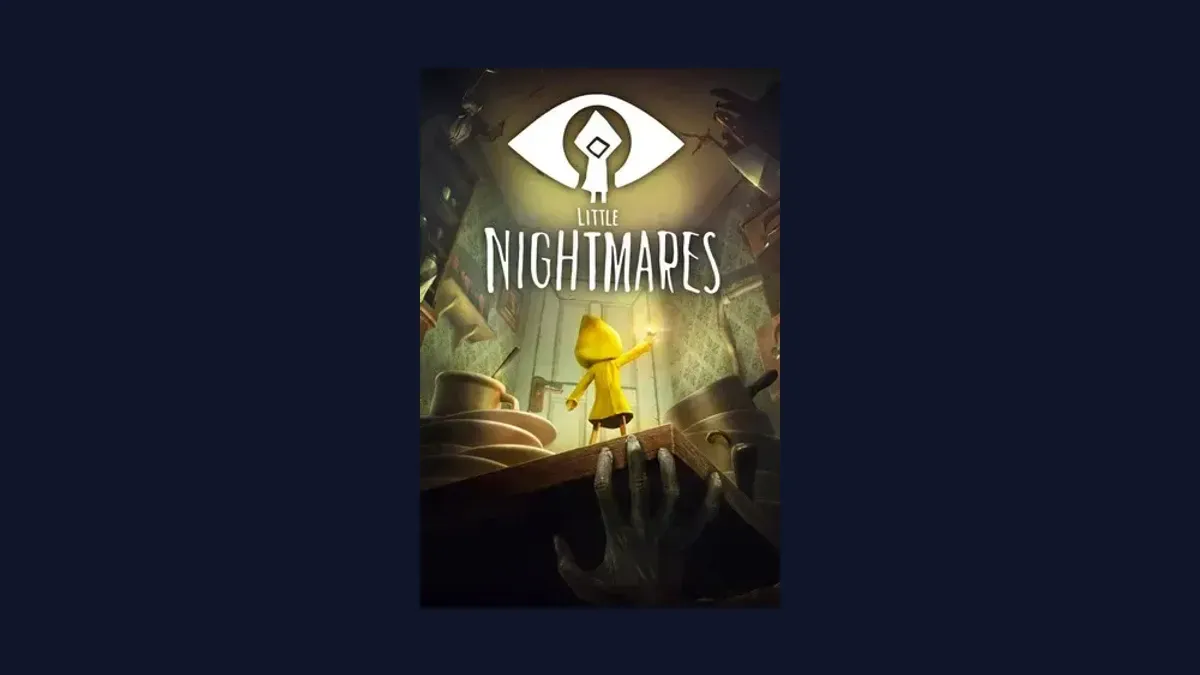
The best games like Little Nightmares combine more than horror and platforming. A close alternative should make the protagonist feel vulnerable inside an oversized or hostile world, then use puzzles, stealth, pursuit, environmental storytelling, and unsettling visual design to guide the escape.
Closest overall alternative: Little Nightmares III Best standalone alternative: INSIDE Best dark-fairytale alternative: Bramble: The Mountain King Best minimalist puzzle-platformer: LIMBO
What Makes a Game Similar to Little Nightmares?
Little Nightmares is a single-player puzzle-platform adventure developed by Tarsier Studios and published by BANDAI NAMCO Entertainment. The player controls Six, a small and vulnerable child attempting to escape the Maw, a vast metal vessel inhabited by distorted adults and other dangers.
A meaningful alternative should share several defining attributes:
- Vulnerable protagonist: survival depends on avoidance, observation, movement, and timing rather than direct power.
- Distorted scale: oversized rooms, furniture, machinery, creatures, or architecture make the protagonist appear small.
- Puzzle-platforming: traversal and environmental mechanisms determine how the player advances.
- Stealth and evasion: hiding, waiting, distracting, or running is often safer than confrontation.
- Cinematic presentation: camera framing, animation, lighting, and environmental transitions create visual storytelling.
- Environmental narrative: spaces, objects, inhabitants, and repeated imagery explain the world without extensive exposition.
- Minimal dialogue: meaning is communicated primarily through action, sound, and visual context.
- Grotesque pursuers: hostile figures embody the fears, rules, or corruption of the setting.
- Dark fairytale imagery: innocence, folklore, childhood, or fantasy is placed beside disturbing material.
- Oppressive locations: industrial complexes, forests, institutions, houses, or labyrinths feel hostile and difficult to understand.
- Atmospheric sound: footsteps, machinery, breathing, music, silence, and distant movement create tension.
- Compact single-player journey: the experience prioritizes pacing, memorable scenes, and interpretation over a large open world.
No alternative reproduces the Maw exactly. The games below are ranked by how strongly they overlap with Little Nightmares through perspective, vulnerability, puzzles, presentation, atmosphere, and narrative delivery.
Games Like Little Nightmares at a Glance
| Game | Strongest shared attributes | Main difference | Best for |
|---|---|---|---|
| Little Nightmares III | Same universe, puzzle-platforming, scale, horror, escape | Two protagonists and online co-op | Closest overall alternative |
| INSIDE | Cinematic puzzles, pursuit, dystopia, wordless narrative, 2.5D | More industrial and politically suggestive | Closest standalone match |
| Bramble: The Mountain King | Vulnerable child, dark folklore, cinematic horror, creatures | Nordic fables and direct boss encounters | Dark fairytale horror |
| LIMBO | Vulnerable child, monochrome world, traps, puzzles, minimalism | Pure 2D silhouette presentation | Minimalist platforming |
| ANIMAL WELL | Puzzle-platforming, darkness, creatures, secrets, exploration | Nonlinear Metroidvania labyrinth | Environmental discovery |
| Hollow Knight | Small protagonist, ruined kingdom, atmosphere, platforming, lore | Combat-led Metroidvania structure | Exploration and worldbuilding |
| Sally Face - Episode One | Young protagonist, mystery, disturbing imagery, puzzles | Point-and-click narrative adventure | Character-led mystery |
| Fran Bow | Child perspective, dark fantasy, puzzles, psychological horror | Dialogue-heavy point-and-click structure | Surreal narrative horror |
| MADiSON | Environmental puzzles, oppressive house, psychological horror | First-person camera mechanic | Puzzle-focused terror |
| Amnesia: The Dark Descent | Vulnerability, hiding, puzzles, dark spaces, pursuit | First-person survival horror | Helpless immersion |
| Outlast | Vulnerability, pursuit, hostile institution, first-person horror | Investigation and chase focus | Intense evasion |
| Scorn | Environmental puzzles, grotesque world, visual narrative, isolation | First-person biomechanical science fiction | Disturbing world design |
1. Little Nightmares III
Closest match for: the same universe, vulnerable protagonists, atmospheric puzzle-platforming, grotesque creatures, escape, and environmental storytelling
Developer: Supermassive Games
Publisher: Bandai Namco Entertainment
Release date: October 10, 2025
Modes: Single-player, co-op, multiplayer, and online co-op
Genres: Adventure and arcade
Little Nightmares III is the closest possible alternative because it continues the series inside the Nowhere. Low and Alone search for an escape while moving through distorted environments filled with oversized threats and environmental puzzles.
The two protagonists carry different tools. Low’s bow and Alone’s wrench give puzzles and encounters a cooperative relationship, although the journey can also be played with an AI companion.
The series identity remains intact through scale, visual storytelling, pursuit, unsettling inhabitants, and the contrast between childlike characters and hostile spaces. The major structural change is that danger and puzzle solving can now be shared by two online players.
How Little Nightmares III Compares with Little Nightmares
- Shared: same universe, puzzle-platforming, horror, distorted scale, vulnerable protagonists, grotesque pursuers, environmental storytelling, escape, and atmospheric presentation.
- Different: Little Nightmares III introduces two protagonists, complementary tools, and online cooperative play.
- Choose it if: you want the direct continuation of the series’ visual and mechanical identity.
2. INSIDE
Closest match for: cinematic puzzle-platforming, a vulnerable child, wordless storytelling, pursuit, dystopian spaces, and disturbing transformation
Developer and publisher: Playdead
Release date: June 29, 2016
Mode: Single-player
Genres: Action, adventure, indie, puzzle, and platformer
INSIDE follows a child moving through forests, farms, laboratories, factories, and controlled crowds while being hunted and drawn toward the center of a dark project.
Its strongest relationship with Little Nightmares is visual causality. The player learns what the world permits by watching machinery, guards, animals, crowds, and environmental reactions. Dialogue is unnecessary because framing and motion communicate the immediate problem.
The puzzle design is tightly integrated into pursuit and traversal. INSIDE is more restrained in color and more focused on a dystopian industrial system, while Little Nightmares uses warped domestic imagery and monstrous adult figures.
How INSIDE Compares with Little Nightmares
- Shared: vulnerable child, 2.5D puzzle-platforming, stealth, escape, cinematic presentation, minimal dialogue, oppressive architecture, and environmental storytelling.
- Different: INSIDE uses a colder dystopian setting, more abstract political imagery, and fewer fairytale elements.
- Choose it if: you want the closest standalone combination of wordless puzzles, pursuit, and unsettling visual narrative.
3. Bramble: The Mountain King
Closest match for: a small child in a dangerous world, dark folklore, grotesque creatures, cinematic scenes, and a rescue journey
Developer: Dimfrost Studio
Publisher: Max Ent Games Ltd
Release date: April 27, 2023
Mode: Single-player
Genres: Adventure and indie
Bramble: The Mountain King follows a child through a world inspired by dark Nordic fables while searching for a missing sibling. Forests, ruins, water, creatures, and folklore repeatedly shift between beauty and danger.
Scale creates vulnerability. The protagonist moves through spaces dominated by enormous inhabitants and environmental threats, making observation and cautious traversal essential.
Bramble tells its fairytale more directly and includes clearer combat or boss-like confrontations. Little Nightmares is more industrial, ambiguous, and focused on stealth against recurring pursuers.
How Bramble Compares with Little Nightmares
- Shared: child protagonist, dark fairytale, cinematic adventure, distorted scale, atmospheric horror, puzzles, grotesque creatures, rescue, and single-player journey.
- Different: Bramble draws from Nordic mythology, uses outdoor folklore settings, and includes more direct major encounters.
- Choose it if: childhood vulnerability and dark folklore are your favorite Little Nightmares attributes.
4. LIMBO
Closest match for: minimalist puzzle-platforming, a vulnerable child, deadly traps, environmental ambiguity, dark atmosphere, and silence
Developer and publisher: Playdead
Release date: August 2, 2011
Mode: Single-player
Genres: Action, adventure, indie, puzzle, and platformer
LIMBO begins with a child entering a hostile monochrome world while searching for a sibling. The game provides little explanation and asks the player to understand danger through observation and repeated interaction.
Its puzzles use gravity, weight, timing, creatures, machinery, and traps. The limited visual palette makes silhouettes and motion especially important because the player must identify hazards without conventional signposting.
LIMBO is strictly 2D and visually minimalist. It lacks Little Nightmares’ detailed three-dimensional rooms and grotesque close-up character design, but it established many of the same puzzle-horror relationships.
How LIMBO Compares with Little Nightmares
- Shared: child protagonist, puzzle-platforming, minimal dialogue, death traps, environmental storytelling, dark atmosphere, vulnerability, and ambiguous journey.
- Different: LIMBO uses monochrome silhouettes, pure side-scrolling movement, and an even more minimal narrative presentation.
- Choose it if: simple controls, visual ambiguity, and carefully staged environmental danger matter most.
5. ANIMAL WELL
Closest match for: puzzle-platforming, darkness, unsettling creatures, environmental interaction, secrets, limited explanation, and dense spaces
Developer: Billy Basso
Publisher: Bigmode
Release date: May 9, 2024
Mode: Single-player
Genres: Action, adventure, and indie
ANIMAL WELL places the player inside a dense interconnected labyrinth inhabited by animals, mechanisms, hazards, and hidden layers of interaction.
Objects are used to influence creatures and environments in unexpected ways. The player learns through experimentation rather than lengthy instructions, and apparently decorative details can become puzzle information.
The game is nonlinear and structured more like a Metroidvania. It replaces Little Nightmares’ cinematic chapter progression with deeper exploration, item interactions, and nested secrets.
How ANIMAL WELL Compares with Little Nightmares
- Shared: puzzle-platforming, horror undertones, atmospheric darkness, unsettling creatures, environmental storytelling, limited guidance, secrets, and vulnerable exploration.
- Different: ANIMAL WELL uses pixel graphics, an interconnected Metroidvania map, reusable items, and highly layered optional puzzles.
- Choose it if: environmental experimentation and discovering hidden systems are your priorities.
6. Hollow Knight
Closest match for: a small protagonist, atmospheric ruins, platforming, environmental lore, strange inhabitants, isolation, and visual storytelling
Developer and publisher: Team Cherry
Release date: February 24, 2017
Mode: Single-player
Genres: Action, indie, and platformer
Hollow Knight follows a small wanderer through Hallownest, a vast ruined kingdom of insects, caverns, settlements, and corrupted creatures.
Its strongest Little Nightmares relationship is the contrast between protagonist and world. Architecture, inhabitants, sound, and remains suggest a civilization whose history must be reconstructed through exploration.
Hollow Knight gives combat, bosses, navigation, and ability progression a much larger role. It is a nonlinear Metroidvania rather than a compact cinematic puzzle adventure.
How Hollow Knight Compares with Little Nightmares
- Shared: small protagonist, atmospheric platforming, ruined world, unusual creatures, environmental storytelling, isolation, visual lore, and single-player discovery.
- Different: Hollow Knight emphasizes combat, bosses, Metroidvania exploration, upgrades, and a much larger interconnected map.
- Choose it if: melancholy atmosphere and discovering a decayed world matter more than stealth puzzles.
7. Sally Face - Episode One
Closest match for: a young protagonist, disturbing mystery, dark imagery, puzzles, unsettling environments, and story-rich discovery
Developer and publisher: Portable Moose
Release date: December 14, 2016
Mode: Single-player
Genres: Adventure, indie, and puzzle
Sally Face - Episode One begins a mystery involving a young protagonist, an apartment building, unexplained events, unusual residents, and a series of disturbing discoveries.
The game shares Little Nightmares’ use of childhood perspective to make an adult-controlled environment feel unfamiliar and threatening. Rooms, objects, conversations, and visual details create uncertainty about what is ordinary and what is dangerous.
Its mechanics are point-and-click and dialogue-led rather than platform-based. Character relationships and explicit mystery receive more attention than pursuit or physical escape.
How Sally Face Compares with Little Nightmares
- Shared: young protagonist, horror, dark imagery, atmospheric spaces, puzzles, mystery, disturbing inhabitants, and single-player storytelling.
- Different: Sally Face is a dialogue-driven point-and-click adventure with episodic character development.
- Choose it if: the childhood perspective and unsettling narrative matter more than platforming.
8. Fran Bow
Closest match for: child perspective, surreal horror, puzzles, dark fantasy, threatening adults, visual symbolism, and a journey through altered realities
Developer and publisher: Killmonday Games AB
Release date: August 27, 2015
Mode: Single-player
Genres: Adventure and indie
Fran Bow is a creepy point-and-click adventure about a child confronting an unfair destiny through institutions, fantasy spaces, disturbing imagery, and changing perceptions of reality.
Its Little Nightmares relationship comes from setting childlike imagery against cruel or incomprehensible adult systems. Ordinary objects and places can reveal a far darker visual layer.
Fran Bow uses dialogue, inventory puzzles, and explicit story development. Little Nightmares communicates more through movement, scale, pursuit, and environmental implication.
How Fran Bow Compares with Little Nightmares
- Shared: child protagonist, psychological horror, dark fantasy, puzzles, oppressive institutions, threatening imagery, visual symbolism, and story-rich journey.
- Different: Fran Bow is a point-and-click adventure with dialogue, inventory puzzles, and reality-shifting narrative mechanics.
- Choose it if: surreal childhood horror and story interpretation are more important than platforming.
9. MADiSON
Closest match for: environmental puzzles, an oppressive interior, visual clues, psychological horror, isolation, and a hostile unseen presence
Developer and publisher: BLOODIOUS GAMES
Release date: July 8, 2022
Mode: Single-player
Genres: Action, adventure, simulation, and indie
MADiSON is a first-person psychological-horror game in which an instant camera connects the physical environment to supernatural events. Players explore, photograph, develop images, and solve puzzles while surviving an oppressive house.
Its strongest Little Nightmares relationship is environmental interpretation. Objects, rooms, sounds, photographs, and repeated symbols reveal how spaces should be understood.
MADiSON replaces platforming and child-scale traversal with first-person investigation. Fear is more direct and concentrated around supernatural presence and confined interiors.
How MADiSON Compares with Little Nightmares
- Shared: horror, environmental puzzles, dark interiors, atmospheric sound, visual storytelling, limited safety, isolation, and single-player progression.
- Different: MADiSON is a first-person psychological-horror game built around an instant camera and explicit supernatural puzzles.
- Choose it if: solving environmental puzzles inside a hostile house is the experience you want.
10. Amnesia: The Dark Descent
Closest match for: vulnerability, dark spaces, hiding, environmental puzzles, pursuit, limited defensive power, and oppressive atmosphere
Developer and publisher: Frictional Games
Release date: September 8, 2010
Mode: Single-player
Genres: Action, adventure, and indie
Amnesia: The Dark Descent places the player inside a castle while uncovering lost context through exploration, documents, rooms, mechanisms, and hostile encounters.
Like Little Nightmares, survival often depends on avoiding danger rather than defeating it. Darkness, sound, doors, hiding places, and route knowledge shape the player’s response to pursuit.
The first-person perspective makes the world feel physically immediate, while its puzzles and narrative are more explicit. It lacks Little Nightmares’ platforming, distorted child scale, and cinematic side-view composition.
How Amnesia Compares with Little Nightmares
- Shared: vulnerable protagonist, survival horror, stealth, pursuit, environmental puzzles, dark architecture, atmospheric sound, and limited combat power.
- Different: Amnesia is a first-person castle horror game with sanity pressure, documents, and more direct psychological storytelling.
- Choose it if: helplessness, hiding, and exploring oppressive interiors are your priorities.
11. Outlast
Closest match for: vulnerable first-person exploration, pursuit, hiding, hostile institutions, investigation, and survival without conventional combat
Developer and publisher: Red Barrels
Release date: September 4, 2013
Mode: Single-player
Genres: Action and indie
Outlast follows an investigation inside Mount Massive Asylum, where the player must document evidence and survive long enough to uncover the facility’s secret.
The game shares Little Nightmares’ predator-and-prey structure. Routes, hiding places, sound, timing, and understanding a pursuer’s movement are more important than direct confrontation.
Outlast is more explicit, faster, and less puzzle-focused. Its camera and night vision create a documentary perspective rather than the carefully framed miniature-diorama presentation of Little Nightmares.
How Outlast Compares with Little Nightmares
- Shared: vulnerability, stealth, pursuit, oppressive institution, hostile inhabitants, environmental storytelling, limited defensive power, and single-player horror.
- Different: Outlast is a first-person investigative survival-horror game centered on chases, documentation, and night vision.
- Choose it if: escape sequences and hiding from pursuers are your favorite Little Nightmares mechanics.
12. Scorn
Closest match for: grotesque environmental design, isolation, visual storytelling, puzzles, oppressive architecture, and a nightmarish world
Developer: Ebb Software
Publisher: Kepler Interactive
Release date: October 14, 2022
Mode: Single-player
Genres: Action, adventure, and indie
Scorn places the player inside a biomechanical world where architecture, machinery, creatures, and tools appear to belong to one disturbing living system.
Its closest Little Nightmares relationship is environmental coherence. The world is not simply decorated with horror elements; its mechanisms and spaces express the same unsettling logic as its inhabitants.
Scorn uses first-person exploration, slower puzzles, and limited combat. It lacks a child protagonist and platforming, while its visual material is more biomechanical and abstract.
How Scorn Compares with Little Nightmares
- Shared: grotesque world, atmospheric horror, environmental puzzles, isolation, visual narrative, oppressive locations, limited explanation, and single-player immersion.
- Different: Scorn is a first-person biomechanical science-fiction adventure with slower traversal and limited weapon use.
- Choose it if: disturbing environmental art and interpretation matter more than character-led storytelling.
Which Little Nightmares Alternative Should You Play First?
Choose according to the Little Nightmares attribute you most want to preserve:
- Direct continuation of the same universe: Little Nightmares III
- Closest standalone cinematic puzzle-platformer: INSIDE
- Childhood fear and dark folklore: Bramble: The Mountain King
- Minimalist traps and environmental puzzles: LIMBO
- Dense secrets and creature interaction: ANIMAL WELL
- Atmospheric exploration and hidden lore: Hollow Knight
- Young-protagonist mystery: Sally Face - Episode One
- Surreal child-perspective narrative: Fran Bow
- First-person environmental puzzles: MADiSON
- Helpless exploration and hiding: Amnesia: The Dark Descent
- Intense pursuit and escape: Outlast
- Grotesque environmental worldbuilding: Scorn
Other Relevant Little Nightmares Alternatives
Several other games match narrower parts of the search:
- The Evil Within combines third-person survival horror, grotesque environments, stealth, psychological distortion, limited resources, and a story-rich nightmare.
- Lucius uses a child protagonist, third-person exploration, stealth, puzzles, supernatural abilities, and a dark household setting from a very different moral perspective.
How we chose these games
Every game here either sits among the PC games we price for this topic or shares at least four of Little Nightmares’s most characteristic Steam user tags (read on 7 October 2026). We then ordered them by how much of Little Nightmares’s core loop they keep.
Questions
What is the closest game to Little Nightmares?
Little Nightmares III is the closest overall alternative because it continues the same universe, scale, puzzle-platform structure, grotesque creatures, environmental storytelling, and escape-focused horror. INSIDE is the closest standalone alternative.
What type of game is Little Nightmares?
Little Nightmares is a single-player atmospheric horror puzzle-platformer. Its main attributes include a vulnerable child protagonist, stealth, pursuit, environmental puzzles, cinematic 2.5D presentation, grotesque inhabitants, minimal dialogue, and visual storytelling.
Which alternatives are puzzle-platformers?
Little Nightmares III, INSIDE, LIMBO, ANIMAL WELL, Hollow Knight, and Bramble all combine platforming with puzzles or environmental problem solving, although Hollow Knight and ANIMAL WELL use broader Metroidvania structures.
Which game has the closest atmosphere?
INSIDE provides the closest standalone atmosphere through its quiet cinematic presentation, vulnerable protagonist, industrial spaces, ambiguous story, and controlled visual tension. Bramble is the stronger choice for dark-fairytale imagery.
Which alternatives use minimal dialogue?
INSIDE, LIMBO, ANIMAL WELL, Hollow Knight, Bramble, and Scorn rely heavily on environments, animation, sound, and visual context. Their degree of explicit narrative guidance varies.
Which games focus on stealth and hiding?
Little Nightmares III, INSIDE, Amnesia: The Dark Descent, Outlast, MADiSON, and The Evil Within use stealth, pursuit, avoidance, or limited defensive power as important parts of survival.
Is Hollow Knight similar to Little Nightmares?
Yes, primarily through atmosphere, platforming, a small protagonist, strange inhabitants, ruins, environmental lore, and isolation. Hollow Knight differs by emphasizing combat, bosses, upgrades, backtracking, and nonlinear Metroidvania exploration.
Is LIMBO or INSIDE more like Little Nightmares?
INSIDE is generally the closer complete match because it shares cinematic 2.5D presentation, fluid animation, puzzle-platforming, pursuit, a vulnerable child, industrial environments, and wordless storytelling. LIMBO is the stronger option for monochrome minimalism and trap-based puzzles.
Which alternative is best for psychological horror?
MADiSON and Amnesia: The Dark Descent provide first-person psychological horror with environmental puzzles. Fran Bow and Sally Face approach psychological horror through narrative adventure mechanics, while Scorn relies on unsettling world design and ambiguity.
Does Little Nightmares III support co-op?
Yes. Its listed modes are single-player, multiplayer, co-op, and online co-op. Two protagonists work together through complementary tools and puzzle interactions; local split-screen co-op is not among them.

Guides written and checked by the gamekeys.deals team against our own price data and the stores' published policies.