The Best Games Like Mewgenics
Discover 12 games like Mewgenics, with tactical combat, strange rosters, roguelite runs, dark humor, mutations and unpredictable build synergies.
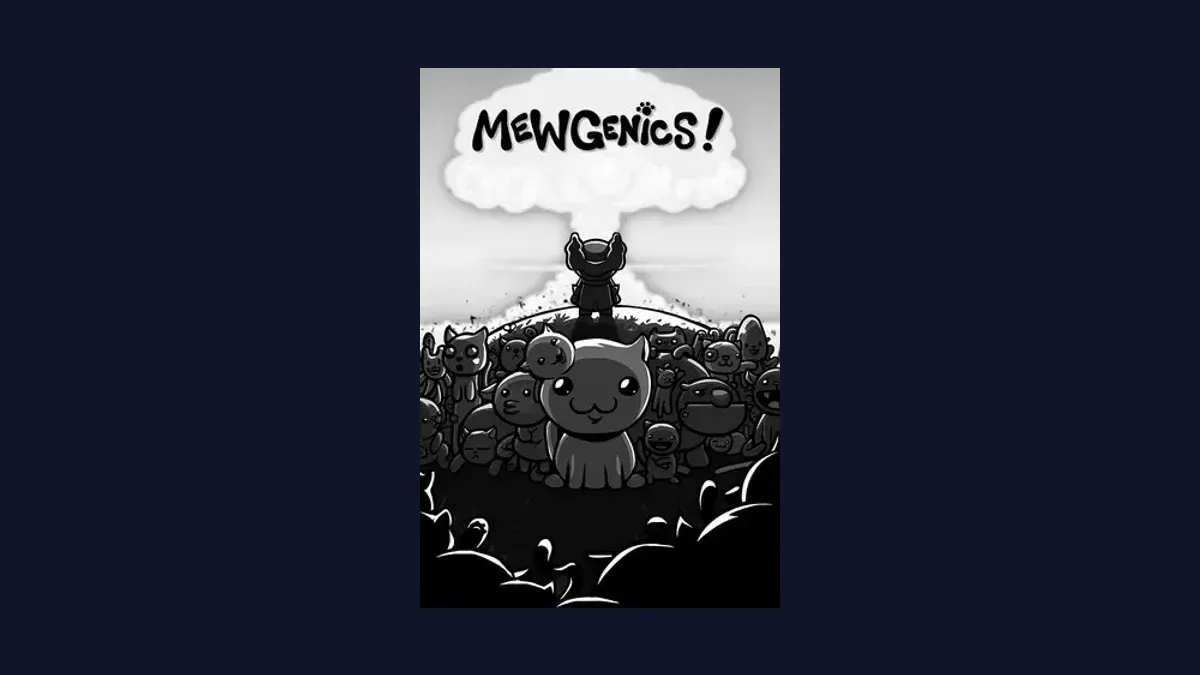
The best game like Mewgenics is Pit People because it combines strange recruitable units, turn-based positioning, dark comedy and unpredictable squad synergies. Choose Darkest Dungeon for permanent consequences, Caves of Qud for mutation-heavy simulation, or The Binding of Isaac for another Edmund McMillen game built around chaotic item combinations.
Mewgenics is difficult to replace with one direct alternative. Its appeal comes from several connected systems: breeding cats across generations, inheriting traits, drafting abilities, managing a household and leading an imperfect roster into tactical roguelite adventures. The games below reproduce different parts of that formula without pretending to offer the same genetic simulation.
Games like Mewgenics at a glance
| Game | Best for | Main similarity |
|---|---|---|
| Pit People | Closest overall alternative | Strange recruits, positioning and dark humor |
| Darkest Dungeon | Persistent roster consequences | Traits, stress, permadeath and risky expeditions |
| XCOM: Enemy Unknown | High-stakes squad tactics | Permanent soldiers and campaign management |
| Caves of Qud | Mutations and systemic freedom | Biological variation and emergent interactions |
| Despot’s Game | Building a disposable army | Equipment-based roles and procedural runs |
| The Last Spell | Squad defense and rebuilding | Tactical battles with roguelite progression |
| Monster Train | Explosive build synergies | Drafting, upgrades and unpredictable combinations |
| As We Descend | Squad sculpting and deck-building | Expeditions, recruitment and tactical planning |
| LONESTAR | Strategic roguelike runs | Build construction and repeatable bounty hunts |
| WORLD OF HORROR | Dark roguelite storytelling | Unforgiving choices and procedural horror |
| Deck of Haunts | Dark humor and management | Building a hostile system around trapped visitors |
| The Binding of Isaac | Shared creator and item chaos | Dark humor, random runs and broken synergies |
How these alternatives were selected
The closest Mewgenics alternatives share more than turn-based combat. They let several systems collide, then ask the player to manage whatever survives.
The ranking prioritizes:
- Recruiting, breeding or developing an unusual roster
- Permanent traits, injuries or losses
- Tactical positioning and meaningful turn order
- Roguelite runs with changing tools and outcomes
- Build synergies that can become unexpectedly powerful
- Dark humor, grotesque presentation or strange worlds
- Replay value through procedural content and experimentation
- Availability on PC
The first six games provide the strongest tactical and roster-management matches. Later recommendations isolate particular qualities such as deck-building, horror, mutations or the design style associated with Mewgenics.
1. Pit People
Best overall game like Mewgenics
Pit People is the closest complete alternative because it combines turn-based positioning, bizarre recruitable fighters and a comedic world that treats absurdity as part of its strategy.
Battles take place on hex-based maps. Units generally attack according to positioning, so movement determines targets, protection and the shape of the next turn. The player cannot rely only on selecting the strongest attack from a menu.
The recruitment system allows many unusual enemies to join the roster. A party can contain conventional fighters alongside robots, creatures and stranger species, each contributing a different tactical role.
Loot and equipment modify those roles further. Building a useful squad involves testing combinations and accepting that an unconventional recruit may solve a problem better than a familiar archetype.
Pit People supports single-player, cooperative and competitive modes, including split-screen co-op. Mewgenics is a single-player game, so Pit People is also the strongest recommendation for someone who wants to share tactical chaos with another person.
Choose Pit People if the humor, strange roster and positioning puzzles mattered most. It does not reproduce cat breeding or inherited genetics, but it creates the closest similar energy during squad construction.
2. Darkest Dungeon
Best for persistent roster consequences
Darkest Dungeon asks the player to recruit, train and equip adventurers before sending them into hostile ruins beneath a damaged estate.
Heroes accumulate more than wounds. Stress, diseases and traits can alter behavior and performance after an expedition, creating imperfect veterans whose histories remain attached to the roster.
Combat uses fixed party positions. Abilities work from particular ranks and target specific enemy locations, making team order, speed and recovery part of every tactical plan.
Permanent loss ensures that a successful campaign cannot depend on one irreplaceable party. The player must develop reserves, decide when to retreat and judge whether recovery costs are worth paying.
That structure resembles Mewgenics through its focus on flawed individuals and consequences that continue after combat. Both games ask the player to build a functioning strategy from units that are never completely predictable.
Choose Darkest Dungeon if roster management, risk and cold decisions matter more than comedy. It is darker and more punishing, with less freedom to create deliberately ridiculous combinations.
3. XCOM: Enemy Unknown
Best high-stakes tactical strategy alternative
XCOM: Enemy Unknown combines squad missions with the strategic management of an organization defending Earth from an alien invasion.
Soldiers gain ranks, abilities and personal value through successful missions. When a soldier dies, the loss is permanent, forcing the player to maintain a broader roster rather than investing everything in one ideal squad.
Turn-based battles use cover, sight lines, movement and limited actions. One exposed unit or missed shot can change the mission, but careful positioning and coordinated abilities reduce the influence of bad luck.
Outside combat, the player manages research, engineering, facilities and international panic. Decisions made at the base determine what equipment and information will be available during later operations.
Choose XCOM if the tactical campaign and permanent roster losses are the main appeal of Mewgenics. It is more serious and military, with none of the breeding or dark cartoon humor.
4. Caves of Qud
Best for mutations and systemic freedom
Caves of Qud is a science-fantasy roguelike built around deep simulation, procedural history and character creation through mutations or cybernetics.
A mutant can develop additional limbs, unusual senses, mental powers or biological attacks. A True Kin character instead relies more heavily on advanced cybernetic equipment.
The world contains interacting creatures, factions, substances and environmental systems. An ability can solve combat, movement or social problems in ways its description does not initially make obvious.
Turn-based exploration gives the player time to consider those interactions, but the density of information creates a substantial learning curve. Runs can end because of one misunderstood threat or overconfident experiment.
Caves of Qud resembles Mewgenics through biological variance and the possibility of discovering combinations that transform how the game is played. It lacks household breeding but provides much greater freedom over one evolving character.
Choose it if mutations and systemic possibility mattered more than squad presentation. It is the strongest alternative for players who want a game that can continue revealing unexpected interactions after many hours.
5. Despot’s Game: Dystopian Battle Simulator
Best for building a disposable army
Despot’s Game sends groups of vulnerable humans through procedural dungeons filled with enemies, equipment and cruel experiments.
The player does not control every fighter directly during battle. Strategy happens through recruitment, formation and equipment, which changes units into roles suited to the current army.
Combining enough related equipment can create classes and synergies. A weak individual may become useful because the surrounding group completes a larger build.
Loss is expected. The army changes constantly as units are sacrificed, replaced or redirected into another composition.
That disposable roster and dark humor make Despot’s Game a strong alternative for players who enjoyed manipulating generations of strange cats without expecting every unit to survive.
Choose it when army construction and automated outcomes sound more appealing than controlling every tactical action. Pit People and XCOM provide more direct battlefield command.
6. The Last Spell
Best for tactical defense and rebuilding
The Last Spell divides its campaign between defending a settlement at night and rebuilding its economy and fortifications during the day.
A small squad of heroes fights large waves across grid-based battlefields. Movement, action points, weapon ranges and area attacks determine whether a limited team can contain a much larger force.
Heroes develop different statistics, traits and equipment, which can turn one recruit into a specialist that the player did not initially plan to build.
After each battle, resources must be divided between stronger defenses, production and recovery. A successful night can still create long-term problems if buildings are destroyed or important characters are weakened.
Roguelite progression unlocks additional options across attempts. The structure matches Mewgenics through squad variation, tactical consequences and the need to improve a home base between dangerous expeditions.
Choose The Last Spell if the tactical combat and management loop mattered most. Its larger defensive battles are more predictable in purpose than Mewgenics’ strange family experiments.
7. Monster Train
Best for explosive build synergies
Monster Train is a roguelike deck-building game about defending a train across several vertical floors.
Runs combine two clans, a champion and drafted cards. Unit placement, floor capacity and spell timing determine whether enemies reach the Pyre at the top.
Cards and units can be upgraded with effects that multiply one another. A modest unit may become the center of a run after the correct enhancements, while an expensive rare card can weaken a deck that cannot support it.
The similarity to Mewgenics comes from experimentation. The player repeatedly drafts imperfect options, searches for an interaction and discovers whether the completed build survives escalating encounters.
Choose Monster Train if finding broken combinations mattered more than breeding or grid movement. It is primarily a card battler, but its layered battlefield adds more positional strategy than many deck-builders.
8. As We Descend
Best squad-based roguelike deck-builder
As We Descend combines tactical card battles, squad construction and management of a final human settlement.
Players recruit units, organize squads and prepare expeditions against enormous threats. Cards represent the capabilities available during battle, while the composition of the force determines which plans are realistic.
The Vault-City provides a strategic layer between expeditions. Allies and resources need to be developed so that later descents begin with stronger possibilities.
Its closest connection to Mewgenics is the phrase “squad sculpting”: the roster is not a static list of classes, but a system shaped by recruited units and tactical needs.
As We Descend remains in Early Access. Choose it for a newer combination of deck-building and squad management, but expect systems and balance to keep changing.
9. LONESTAR
Best strategic spaceship roguelike
LONESTAR is a turn-based roguelike deck-builder about a bounty hunter pursuing criminals across space.
Combat uses spaceship units and energy distribution rather than a conventional hand of attack cards. The player assembles parts, assigns resources and creates a plan around the current ship.
Treasures, talents and rewards change the available build during each run. Success depends on constructing an efficient interaction from what appears rather than repeating one guaranteed solution.
The game provides a cleaner and less grotesque alternative to Mewgenics, but preserves the appeal of long-term experimentation and repeatable strategic runs.
Choose LONESTAR if build construction matters more than characters or inherited traits. Its small installation and full controller support also make it practical for a wide range of PCs.
10. WORLD OF HORROR
Best horror roguelite alternative
WORLD OF HORROR mixes investigations, turn-based encounters and cosmic threats inside a stark one-bit presentation.
Each playthrough assembles mysteries and events into a changing campaign. Decisions consume resources, affect Doom and determine whether the investigator can survive long enough to confront the larger crisis.
Combat is only one part of the danger. Injuries, curses and event outcomes can damage a run in ways that are difficult to reverse.
The connection to Mewgenics comes from dark humor, grotesque possibilities and a campaign assembled from unpredictable events. It does not offer squad breeding or grid tactics.
Choose WORLD OF HORROR when atmosphere, unforgiving choices and procedural storytelling are more important than collecting a large roster. Its requirements are modest compared with most modern strategy games.
11. Deck of Haunts
Best for dark management and hostile architecture
Deck of Haunts lets the player control a haunted house that lures visitors inside, manipulates their fear and consumes the resulting essence.
Cards activate rooms, threats and supernatural effects. The mansion’s layout becomes part of the strategy because visitors need to be directed into dangerous paths rather than confronted on an ordinary battlefield.
Resources gained from successful haunts support expansion and stronger systems. The house gradually becomes a constructed build whose rooms and cards reinforce one another.
Its mechanical match to Mewgenics is indirect, but the tone is close: cute or simple presentation covers a deliberately cruel simulation built around emergent outcomes.
Choose Deck of Haunts when dark management and deck-building sound more appealing than controlling a squad. It is a finished single-player game rather than an Early Access project.
12. The Binding of Isaac
Best alternative from the same creator
The Binding of Isaac is an action roguelike created by Edmund McMillen. Its direct combat is very different from Mewgenics, but both games share a design interest in dark humor, repeated failure and overlapping systems.
Runs begin with limited tools and become defined by discovered items. Individual effects can combine into attacks or defensive interactions that are far stronger, stranger or less controllable than expected.
Learning happens through experimentation. The game rarely explains the complete consequence of every pickup before the player experiences it.
The original release is small and lightweight, although players looking for the expanded modern version may prefer The Binding of Isaac: Rebirth.
Choose The Binding of Isaac if the most important connection is McMillen’s approach to random items and potentially broken builds. It is not a tactical strategy substitute, but it is the clearest design companion.
For legitimate access options, see our guide to playing Mewgenics without buying it. For a deeper evaluation of the original game, continue with our Mewgenics review.
Which Mewgenics alternative should you play first?
Match the game to the system you want to preserve:
- Closest overall alternative: Pit People
- Persistent roster consequences: Darkest Dungeon
- High-stakes tactical campaign: XCOM: Enemy Unknown
- Mutations and simulation: Caves of Qud
- Disposable army construction: Despot’s Game
- Squad defense and rebuilding: The Last Spell
- Explosive deck synergies: Monster Train
- Squad-based deck-building: As We Descend
- Spaceship build experimentation: LONESTAR
- Procedural cosmic horror: WORLD OF HORROR
- Dark management: Deck of Haunts
- Shared creator and item chaos: The Binding of Isaac
Pit People is the safest first recommendation because it captures Mewgenics’ tactical comedy and strange roster. Darkest Dungeon is better for permanent consequences, while Caves of Qud offers the strongest biological experimentation.
Games with roster management and permanent consequences
Mewgenics turns ancestry and inherited traits into long-term strategy. None of these alternatives reproduces that complete breeding system, but several make individual units persist between encounters.
Darkest Dungeon carries traits, stress and illness across expeditions. XCOM develops soldiers who can be permanently lost. The Last Spell creates heroes whose equipment and statistics shape the settlement’s chances of surviving another night.
Pit People focuses on capturing and equipping unusual recruits, while Despot’s Game treats units as a more disposable army. Choose according to whether attachment or replacement should define the roster.
Games with mutations and unpredictable builds
Caves of Qud is the strongest mutation-focused recommendation. Its biological abilities and cybernetics can fundamentally change movement, combat and interaction with the world.
The Binding of Isaac and Monster Train provide less literal mutation but stronger item or card synergy. One pickup or upgrade can redefine the rest of the run.
LONESTAR and As We Descend provide more structured build construction through ships, units and decks. They are useful alternatives for players who enjoy experimentation but prefer clearer tactical interfaces.
Turn-based tactics versus automated army building
Pit People, XCOM, Darkest Dungeon and The Last Spell ask the player to make direct combat decisions. Positioning, targeting and action order remain under close control.
Despot’s Game places more emphasis on preparing the army before combat resolves. The strategic challenge is deciding which units, equipment and formation should enter the fight.
Mewgenics contains both planning and tactical execution. Players who preferred battles should start with Pit People or XCOM. Players who preferred breeding, preparation and watching a plan unfold may enjoy Despot’s Game more.
Best lower-spec alternatives
The Binding of Isaac has the smallest listed storage requirement. WORLD OF HORROR, Darkest Dungeon, Caves of Qud, The Last Spell, LONESTAR and Deck of Haunts are also comparatively compact.
Storage alone does not guarantee performance. Processor, graphics and memory requirements still need to be compared with the intended PC.
The 2D and pixel-art alternatives are generally more practical starting points than games that rely on large modern environments or extensive 3D assets.
Final recommendations
Pit People is the best overall game like Mewgenics because it combines unusual recruits, tactical positioning and dark comedy. Darkest Dungeon offers the strongest persistent roster pressure, XCOM: Enemy Unknown provides the clearest high-stakes tactical campaign, and Caves of Qud delivers unmatched mutation-driven simulation.
Choose Despot’s Game for automated army construction, The Last Spell for settlement defense, Monster Train for explosive synergies, or The Binding of Isaac for another Edmund McMillen game built around experimentation and chaotic interactions.
The right alternative depends on which part of Mewgenics created the attachment: the cats, the tactics, the genetics or the possibility that one strange combination could transform a failed family into an unstoppable army.
Questions
What is the best game like Mewgenics?
Pit People is the closest overall alternative because it combines strange recruitable units, turn-based positioning, dark comedy, loot and unpredictable squad synergies.
Which game has the most Mewgenics-like roster management?
Darkest Dungeon is the strongest choice for managing an imperfect roster with persistent traits and permanent losses. Despot's Game is better for building a disposable army around equipment and class combinations.
What should I play after Mewgenics?
Play Pit People for bizarre tactical squads, Caves of Qud for mutations and systemic freedom, or The Binding of Isaac for another Edmund McMillen game built around unpredictable item synergies.
Are any games like Mewgenics multiplayer?
Pit People supports cooperative and competitive multiplayer. Monster Train and Despot's Game include competitive modes, while most of the closest roster-management alternatives are single-player.
Which Mewgenics alternative is best for a lower-spec PC?
The Binding of Isaac, WORLD OF HORROR, Darkest Dungeon, Caves of Qud and The Last Spell have modest listed storage or memory requirements compared with larger modern games.

Guides written and checked by the gamekeys.deals team against our own price data and the stores' published policies.