12 Best Games Like 7 Days to Die
The best games like 7 Days to Die combine zombie survival, scavenging, crafting, base building and co-op, from Project Zomboid to VEIN.
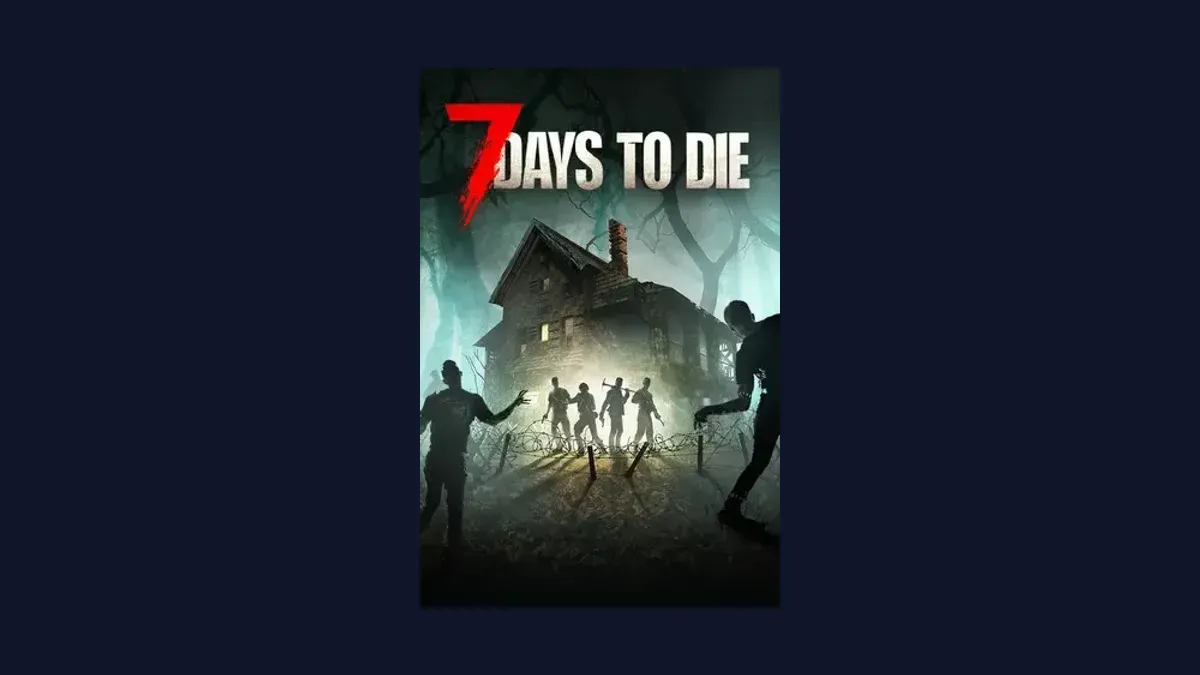
The best games like 7 Days to Die combine open-world survival, dangerous exploration, scavenging, crafting and a home worth defending. Project Zomboid is the closest overall match, while VEIN is the strongest newer multiplayer zombie sandbox and Sons Of The Forest is the best first-person survival-horror alternative.
No other game reproduces every part of 7 Days to Die. Some alternatives deepen character survival and permanent consequences. Others emphasize defensive construction, co-op exploration, melee combat or long-term base progression. The right choice depends on whether the most important feature is zombies, first-person combat, building, multiplayer or the pressure of preparing for the next attack.
Best games like 7 Days to Die at a glance
| Rank | Game | Best for | Perspective | Multiplayer |
|---|---|---|---|---|
| 1 | Project Zomboid | Deep zombie simulation | Isometric | Online and split-screen co-op |
| 2 | VEIN | Newer multiplayer zombie sandbox | First-person | Online co-op and PvP |
| 3 | Sons Of The Forest | First-person survival horror | First-person | Online co-op |
| 4 | State of Decay 2 | Community management | Third-person | Online co-op |
| 5 | HumanitZ | Isometric co-op survival | Isometric | Online co-op and PvP |
| 6 | SurrounDead | Solo looting and exploration | Third-person | Single-player |
| 7 | Dying Light | Parkour and zombie combat | First-person | Online co-op and PvP |
| 8 | Valheim | Progression and defensive building | Third-person | Online co-op |
| 9 | Enshrouded | Voxel building and action RPG combat | Third-person | Online co-op |
| 10 | ARK: Survival Evolved | Creature taming and tribe survival | First- or third-person | Co-op and multiplayer |
| 11 | The Planet Crafter | Peaceful long-term transformation | First-person | Online co-op |
| 12 | Subnautica | Solo exploration and atmosphere | First-person | Single-player |
1. Project Zomboid
Best overall alternative
Project Zomboid is the strongest replacement for players who value the survival simulation underneath 7 Days to Die more than its first-person shooting. The world is full of buildings to search, supplies to ration and zombies that can end a long-running character through one careless mistake.
Its isometric view changes the immediate feel, but the underlying decisions are remarkably familiar. Players secure a shelter, gather tools, manage food, improve skills, prepare vehicles and decide whether another supply run is worth the danger. Injury, exhaustion, sickness and panic can matter as much as weapon damage.
Project Zomboid is also highly configurable. Sandbox settings can change zombie populations, transmission rules, loot rarity, weather and many other systems. That flexibility makes it suitable for both punishing solo survival and persistent multiplayer groups.
Why 7 Days to Die players should try it:
- Detailed zombie survival with meaningful consequences
- Scavenging, crafting, farming and shelter improvement
- Large open-world sandbox
- Solo, online co-op, PvP and split-screen co-op
- Extensive customization and long-term character skills
Main difference: Combat and construction are viewed from an isometric perspective, and there is no scheduled Blood Moon equivalent forcing a major horde attack every seventh night.
2. VEIN
Best newer multiplayer zombie sandbox
VEIN is one of the most direct modern alternatives. It combines a post-apocalyptic open world with abandoned buildings, supply gathering, zombies, home defense, crafting and multiplayer. Players can survive alone or cooperate while rebuilding a defensible place in a collapsed society.
The similarity comes from the complete loop rather than one feature. A trip outside can produce food, building materials or equipment, but it can also expose the player to enemies and unexpected problems. Resources then feed into a safer home and better preparation for later excursions.
VEIN remains an evolving game, so systems and balance can change. Players comfortable with ongoing development will find a sandbox that targets many of the same motivations as 7 Days to Die without simply reproducing its voxel presentation.
Why 7 Days to Die players should try it:
- First-person zombie survival
- Open-world scavenging and exploration
- Base building and home defense
- Solo play, online co-op and PvP
- Character and survival simulation systems
Main difference: VEIN does not center its identity on a fixed seven-day horde cycle.
3. Sons Of The Forest
Best first-person survival-horror alternative
Sons Of The Forest places the player on an isolated island filled with hostile inhabitants, caves and environmental dangers. The objective-driven mystery gives exploration direction, while gathering, crafting and freeform construction create the long-term survival layer.
Building is tactile and flexible. Logs can be cut and placed directly, allowing players to create cabins, walls and defensive structures that respond to the landscape. Hostile groups observe, approach and attack, making the base feel like both a refuge and a visible target.
The game works alone or in online co-op. Companions also help the solo experience feel less empty, although multiplayer remains the better option for players who enjoy dividing building, gathering and exploration duties.
Why 7 Days to Die players should try it:
- First-person survival and crafting
- Flexible base construction
- Dangerous caves and open-world exploration
- Hostile attacks on player settlements
- Solo and online cooperative play
Main difference: The campaign is more authored and horror-focused, with less emphasis on voxel mining, firearm variety and repeated scheduled hordes.
4. State of Decay 2: Juggernaut Edition
Best for managing a survivor community
State of Decay 2 shifts attention from one persistent character to an entire community. Players recruit survivors, secure resources, establish an expandable base and decide which risks the group can afford to take.
Every survivor has individual traits and capabilities. Losing a character can permanently remove a valued fighter, medic or scavenger, creating consequences beyond dropping equipment. Food, medicine, ammunition and building materials sustain the settlement and determine which facilities can operate.
The game lacks 7 Days to Die’s freeform block construction, but it captures the pressure of leaving safety to gather supplies while a larger home depends on success. Online co-op allows friends to assist with combat and scavenging.
Why 7 Days to Die players should try it:
- Zombie-filled open world
- Base facilities and resource upkeep
- Permanent survivor deaths
- Scavenging, vehicles and community growth
- Solo and online co-op
Main difference: Bases use designated sites and facility slots rather than unrestricted structural construction.
5. HumanitZ
Best isometric co-op alternative
HumanitZ combines open-world zombie survival with gathering, crafting, farming and base building. Its isometric camera gives the player a wider view of approaching threats while preserving the tension of searching abandoned locations.
The sandbox supports solo play, online cooperation and PvP. That range makes it suitable for private groups that want to develop a shared home as well as players who prefer the added uncertainty of other survivors.
HumanitZ is especially appealing when Project Zomboid feels too simulation-heavy. It retains detailed survival decisions but delivers more immediate action and approachable third-person shooting from its elevated perspective.
Why 7 Days to Die players should try it:
- Zombies, scavenging and crafting
- Open-world base building
- Cooperative and competitive multiplayer
- Farming and long-term survival
- Isometric combat with a readable battlefield
Main difference: The perspective and combat flow feel closer to an isometric action RPG than a first-person voxel shooter.
6. SurrounDead
Best for solo zombie scavenging
SurrounDead is a single-player open-world survival game focused on looting, exploration and combat in a post-apocalyptic landscape. The player searches settlements, acquires equipment, establishes a base and gradually becomes capable of surviving more dangerous areas.
Its appeal lies in the freedom to choose the next objective. A session can revolve around searching for a better firearm, expanding storage, exploring a distant location or strengthening a shelter. The relatively compact storage requirement also makes it easier to keep installed than many larger survival games.
SurrounDead does not offer multiplayer, but that limitation gives solo players a focused experience without server administration, group scheduling or PvP disruption.
Why 7 Days to Die players should try it:
- Zombie-infested open world
- Loot-driven progression
- Base building and exploration
- Post-apocalyptic atmosphere
- Designed around solo play
Main difference: There is no co-op, and its third-person presentation replaces 7 Days to Die’s first-person voxel systems.
7. Dying Light
Best for movement and zombie combat
Dying Light emphasizes the immediate action side of surviving a zombie outbreak. Its first-person parkour system turns rooftops, alleys and improvised pathways into escape routes, while melee weapons and crafted equipment make close-range encounters physical and dangerous.
Day and night create different risk patterns. Daytime supports scavenging and objective completion, while darkness introduces faster and more dangerous infected. That rhythm resembles 7 Days to Die’s use of time as a threat multiplier, even though the game does not include an equivalent construction system.
Most of the campaign can be experienced in online co-op. Players who enjoy 7 Days to Die primarily for first-person zombie encounters may prefer Dying Light’s polished movement and combat.
Why 7 Days to Die players should try it:
- First-person open-world zombie action
- Day-and-night danger cycle
- Resource gathering and weapon crafting
- Online cooperative campaign play
- Strong melee combat and traversal
Main difference: Dying Light provides limited survival construction and focuses much more heavily on story missions, parkour and action.
8. Valheim
Best for defensive building and progression
Valheim replaces zombies with creatures drawn from a Viking-inspired afterlife, but it preserves much of the gather-build-fight loop. Players explore a procedurally generated world, collect materials, construct settlements and defeat bosses to unlock the resources needed for the next biome.
Construction is central rather than decorative. Shelter, ventilation, food, comfort and crafting stations affect preparation, while attacks can threaten a developed base. Each technological stage changes what the group can build and where it can survive.
The game supports up to ten players, making it a strong option for larger friend groups. Its cooperative progression gives builders, explorers and fighters meaningful work within the same world.
Why 7 Days to Die players should try it:
- Procedural open-world exploration
- Deep base building and crafting
- Settlement attacks and defensive preparation
- Boss-driven progression
- Solo play and online co-op for up to ten players
Main difference: Combat is third-person and melee-heavy, and the world uses mythological enemies instead of zombies and firearms.
9. Enshrouded
Best for voxel building and RPG combat
Enshrouded blends a destructible voxel world with action RPG progression and large-scale construction. The player explores a damaged fantasy kingdom, clears dangerous areas, rescues useful characters and develops increasingly elaborate bases.
Its building tools are among the closest matches for players who enjoy shaping blocks into detailed structures. Construction is visually refined, while terrain manipulation and resource collection add the physical world interaction expected from a survival-crafting game.
Co-op supports groups of up to 16 players. Character skill trees, equipment and boss encounters produce a stronger RPG identity than 7 Days to Die, but the shared cycle of exploration, gathering and building remains familiar.
Why 7 Days to Die players should try it:
- Voxel construction and terrain interaction
- Large open world with dangerous zones
- Crafting, gathering and base progression
- Action RPG skill and equipment systems
- Solo or online co-op for up to 16 players
Main difference: Enshrouded is a fantasy action RPG without zombies, firearms or recurring horde nights.
10. ARK: Survival Evolved
Best for creatures and tribe survival
ARK: Survival Evolved exchanges the undead for dinosaurs and other prehistoric creatures. Players gather resources, craft equipment, build fortified settlements and tame creatures that can serve as transportation, workers or combat partners.
Its multiplayer worlds offer the same broad tension between environmental survival, base development and other players. In PvP, a powerful settlement can attract raids. In cooperative or private play, the challenge comes from creatures, bosses and the long technological climb.
Creature taming gives progression a distinct form. Unlocking a useful mount can change gathering, travel and combat more dramatically than acquiring a single weapon.
Why 7 Days to Die players should try it:
- Open-world survival crafting
- Large and elaborate bases
- Solo, co-op and multiplayer modes
- Technology progression and boss encounters
- Creature taming, breeding and riding
Main difference: Dinosaurs replace zombies, and taming is more important than preparing for scheduled defensive hordes.
11. The Planet Crafter
Best for constructive long-term progression
The Planet Crafter removes zombies and focuses on transforming an uninhabitable world. Players gather resources, maintain survival needs, build a base and create machines that increase atmospheric pressure, heat and oxygen.
The most satisfying difference is visible global progress. A barren landscape gradually develops water, vegetation and a functioning biosphere. Base expansion therefore contributes to both personal survival and the transformation of the planet.
The game supports one to ten players. It suits builders who enjoy 7 Days to Die’s long-term resource and construction loop but want less combat pressure and a clearer constructive objective.
Why 7 Days to Die players should try it:
- First-person resource gathering
- Base building and production growth
- Open-world exploration
- Meaningful long-term environmental progression
- Solo or online co-op for up to ten players
Main difference: Combat and defensive hordes are not the focus. Progress comes from terraforming rather than surviving repeated attacks.
12. Subnautica
Best atmospheric solo alternative
Subnautica takes survival beneath an alien ocean. Players gather materials, fabricate equipment, construct underwater habitats and use vehicles to reach increasingly deep and dangerous biomes.
The game captures the vulnerability of leaving a secure base for an uncertain expedition. Oxygen, depth, food, water and hostile wildlife turn exploration into preparation, while environmental storytelling rewards curiosity.
Base building supports practical needs such as storage, power and vehicle access. The construction system is less destructible than 7 Days to Die’s voxel world, but a distant habitat can become an essential stepping stone into new territory.
Why 7 Days to Die players should try it:
- First-person survival and crafting
- Atmospheric open-world exploration
- Modular base construction
- Equipment and vehicle progression
- Strong environmental mystery
Main difference: Subnautica is single-player and largely avoids conventional gun combat, multiplayer warfare and settlement defense.
How to choose the right alternative
Choose a zombie sandbox
Pick Project Zomboid, VEIN, HumanitZ or SurrounDead if the undead setting is essential. Project Zomboid provides the deepest simulation, VEIN offers a newer first-person multiplayer structure, HumanitZ emphasizes isometric co-op and SurrounDead focuses on solo progression.
Choose first-person survival horror
Sons Of The Forest is the best match for building and co-op, while Dying Light is stronger for movement and combat. Subnautica offers first-person tension without a traditional zombie threat.
Choose base building and progression
Valheim and Enshrouded are the strongest fantasy options. ARK: Survival Evolved offers the largest creature-driven sandbox, while The Planet Crafter provides a lower-combat construction loop with visible environmental growth.
Choose a community-management game
State of Decay 2 is the clear choice when survivor recruitment, resource allocation and permanent character loss matter more than freeform architecture.
Features that make a strong 7 Days to Die alternative
A useful alternative should reproduce several parts of the original game’s appeal rather than merely contain zombies.
A reason to leave safety
Scavenging creates the risk-reward decision at the heart of survival games. Strong alternatives place valuable supplies, knowledge or objectives beyond the player’s secure area.
A meaningful home
The base should improve storage, crafting, defense or progression. Games such as Valheim, Enshrouded and The Planet Crafter make construction central even without zombies.
Escalating danger
7 Days to Die uses the Blood Moon cycle to turn preparation into a deadline. Other games create escalation through nighttime enemies, hostile factions, base attacks, bosses, harsher biomes or increasing resource pressure.
Progress that changes the next expedition
Better tools, vehicles, weapons, skills and facilities should unlock new options rather than only raise numbers. Project Zomboid, ARK and Enshrouded approach this through very different systems, but each makes preparation affect what becomes possible.
Solo and group viability
A good survival sandbox should remain coherent alone while rewarding specialization in multiplayer. Most games in this list support both, while SurrounDead and Subnautica are intentionally solo experiences.
How we chose these games
We started from the PC games we price that cover this topic, then added games that share at least four of 7 Days to Die’s most characteristic Steam user tags (read on 7 October 2026). From that pool we kept the games whose survival, scavenging and base-building loops overlap most with 7 Days to Die, and ordered them by how much of that loop they reproduce.
Frequently asked questions
What game is most similar to 7 Days to Die?
Project Zomboid is the closest overall alternative because it combines zombies, scavenging, crafting, building, character skills and multiplayer in a persistent open world. VEIN is the closer choice for players who need a first-person perspective.
Which game has the best base building?
Enshrouded provides the most detailed voxel construction, while Valheim offers the strongest combination of building, progression and defensive pressure. Sons Of The Forest is the best realistic first-person option.
Which alternative is best for co-op?
VEIN is the best direct zombie-survival co-op alternative. Valheim is ideal for groups of up to ten, while Enshrouded supports even larger cooperative sessions of up to 16 players.
Which game is best for solo players?
Project Zomboid offers the deepest solo zombie simulation. SurrounDead is a more accessible third-person option, while Subnautica provides the strongest authored solo exploration experience.
Are any of these games free?
The games in this selection are paid titles. Availability through subscriptions, promotions or free weekends can change, so temporary access should not be treated as permanent free-to-play status.
Which game should a new survival player choose?
Dying Light is approachable for players who prefer action and guided objectives. The Planet Crafter is a gentler choice for builders, while Project Zomboid is better saved for players who actively want a demanding simulation.
Final verdict
Project Zomboid is the best game like 7 Days to Die overall because it reproduces the tension of scavenging, character development, shelter management and zombie survival in a highly configurable sandbox. Its isometric presentation is the largest difference.
Choose VEIN for a newer first-person multiplayer zombie sandbox, Sons Of The Forest for co-op survival horror, or Valheim for building and defensive progression without zombies. Players primarily interested in community survival should choose State of Decay 2: Juggernaut Edition.
Questions
What game is most similar to 7 Days to Die?
Project Zomboid is the closest overall alternative for deep zombie survival, scavenging, crafting, base management and multiplayer, although it uses an isometric perspective.
Which game like 7 Days to Die has first-person co-op?
Sons Of The Forest is the strongest first-person co-op alternative, with survival horror, crafting, base building and dangerous enemies in an open world.
What is the best newer zombie sandbox like 7 Days to Die?
VEIN is a strong newer choice because it combines zombies, multiplayer, open-world exploration, home defense, crafting and base building.
Are there games like 7 Days to Die without zombies?
Yes. Valheim, Enshrouded, ARK: Survival Evolved, The Planet Crafter and Subnautica preserve exploration, crafting and base building while using different settings and threats.
Which games like 7 Days to Die can be played alone?
Every game in this list supports single-player, although Project Zomboid, VEIN, Sons Of The Forest and State of Decay 2 are especially strong solo zombie-survival choices.

Guides written and checked by the gamekeys.deals team against our own price data and the stores' published policies.